China’s cryogenic air separation sector serves steel, chemicals, refining, electronics, and emerging hydrogen projects. A Cryogenic Air Separation Plant cools and separates air into products such as oxygen, nitrogen, and argon. Buyers compare more than nameplate capacity. They also examine energy use, product purity, operating flexibility, delivery schedules, and long-term service support.
The International Energy Agency reported that global hydrogen demand reached nearly 97 million tonnes in 2023. That figure does not measure air-separation demand directly, but it illustrates the scale of industrial systems that may require reliable oxygen or nitrogen supplies. IEA Executive Director Fatih Birol described hydrogen as “one of the leading options for storing energy from renewables.” The remark concerns energy storage, not air-separation equipment; still, it highlights the wider industrial transition shaping investment decisions. Context matters.
This guide reviews leading Chinese manufacturers through practical criteria: process design, reference projects, equipment integration, safety systems, and after-sales capability. A polished brochure is not enough. Plant owners should request operating references, clarify guaranteed performance conditions, and check how suppliers handle commissioning and spare parts. Small details matter: compressor efficiency, cold-box insulation, and control-room visibility can affect daily operation. Comparisons also have limits. Public data may not reveal site-specific power consumption or maintenance costs, so buyers should verify claims with project records and technical discussions.
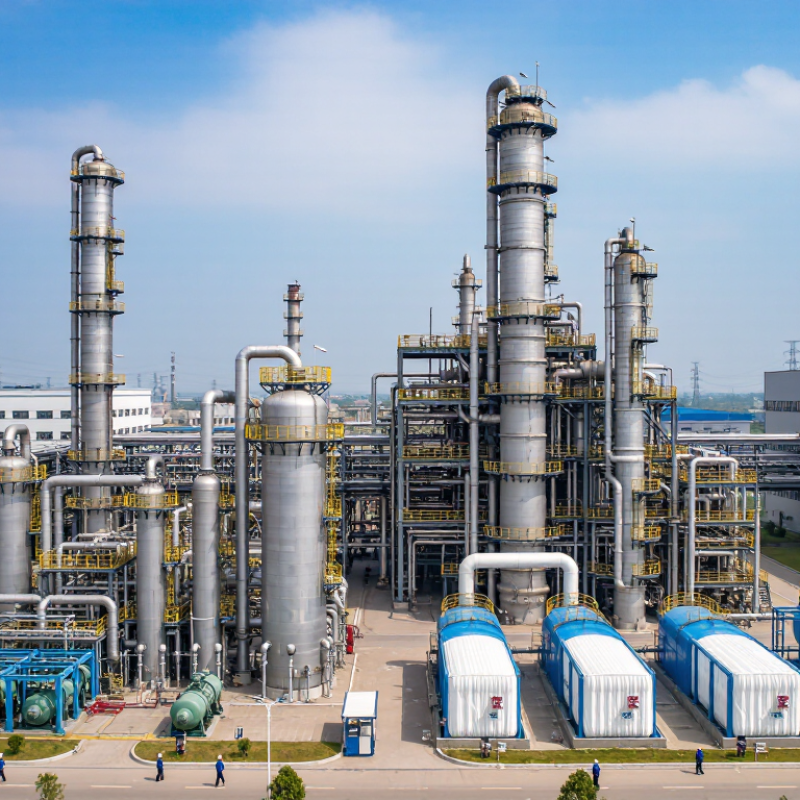
Ambient air contains about 20.95% oxygen by volume when measured on a dry basis. Nitrogen makes up most of the remainder, with argon and trace gases present in smaller amounts. The exact reading can shift with humidity, altitude, and measurement conditions. That detail matters. Moist air can make oxygen appear slightly less concentrated if water vapor is included in the sample.
A cryogenic air separation plant uses this natural mixture as its feed. Air is compressed, cleaned to remove water and carbon dioxide, then cooled until it becomes liquid. In distillation columns, differences in boiling points help separate oxygen from nitrogen and argon. Operators monitor temperature, pressure, and product purity throughout the process. A frost-free pipe or a steady column reading may look ordinary, but both can signal that the system is running as intended. The 20.95% figure is a useful starting point, not a complete operating specification. Real plants must account for local air conditions and the purity required by the end user. Even a clear textbook number has limits.
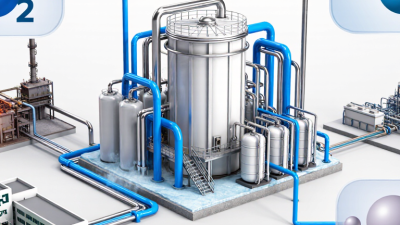
An air separation unit (ASU) does not simply freeze a tank of air. It compresses and cools incoming air, then removes water vapor and carbon dioxide. Both can freeze inside cold equipment and block narrow passages. That matters. Clean, dry air flows through heat exchangers, where returning nitrogen and oxygen streams help cool it further.
A turbine expander supplies additional refrigeration, bringing parts of the process below 100 K. At these temperatures, air components can be separated by distillation. Nitrogen boils near 77 K, argon near 87 K, and oxygen near 90 K at atmospheric pressure. Inside the columns, vapor rises as liquid flows downward, creating repeated contact between the two phases. Tiny temperature and pressure differences do the work.
Argon recovery is less straightforward than a simple boiling-point list suggests. Its properties sit close to oxygen’s, so a separate column and careful process control are often needed. Operators monitor temperatures, pressures, and product purity continuously. The neat process diagram hides real trade-offs: higher recovery can require more energy, and small operating changes can shift column performance. The details matter.
Cryogenic air separation plants are often benchmarked at oxygen purity up to 99.5% and nitrogen purity up to 99.999%. These figures depend on column design, operating conditions, and product specifications. Nitrogen at 99.999% allows roughly 10 parts per million of impurities. Still, purity alone can mislead.
The International Energy Agency’s Energy Efficiency 2023 report estimates that industry accounts for about 37% of global final energy consumption. This figure is not specific to air separation, but it highlights why buyers should compare energy use alongside purity. Check power consumption per unit of gas, recovery rate, and performance under changing demand. A plant may meet its purity target while using more energy than expected.
Tips: Request recent product-analysis records and confirm the measurement basis, sampling point, and operating load. Ask whether stated purity is guaranteed continuously or only at design conditions. Small details matter. A purity headline is useful, but it does not replace verified operating data.
Illustrative oxygen and nitrogen benchmarks, shown as the remaining non-product fraction.
At 99.5% oxygen purity, the remaining fraction is 5,000 ppm; at 99.999% nitrogen purity, it is 10 ppm. These values are calculated from the stated purity benchmarks. Actual impurity composition and product specifications vary by plant and application.
Plant capacity is often quoted in Nm³/h, but the figure needs context. A cryogenic air separation plant may report oxygen, nitrogen, or combined output, and these numbers are not interchangeable. Check the stated purity, delivery pressure, and reference conditions behind each value. A plant rated for 50,000 Nm³/h of nitrogen is not directly comparable with one rated for the same oxygen output.
Energy use should be compared against the same product and operating conditions. Ask for specific power consumption, usually expressed as kWh per Nm³, and confirm which equipment the figure includes. Air compressors, refrigeration systems, and product pumps can change the total. Liquid output also needs separate treatment; its energy demand differs from gaseous product. Look closely at the guaranteed load range, not just peak capacity. On a site visit, meter readings and compressor loading can help check whether stated performance matches actual operation. A neat spreadsheet can hide a costly assumption. The comparison is not always tidy. Check how the plant handles changing demand, since frequent low-load operation may affect efficiency and stable supply.
For a China-based cryogenic air separation plant, assess engineering evidence before comparing catalogue capacity. Ask how the design handles feed-air changes, high ambient temperatures, product purity, and turndown requirements. Review compressor maps, cold-box insulation details, control philosophy, and safeguards for abnormal operating conditions. Request performance data from plants with similar capacity and product mix. Numbers need context.
An EPC track record should show more than completed project names. Ask whether the manufacturer managed process design, equipment integration, commissioning, and operator training. Clarify how schedule delays or interface problems were handled. Where possible, speak with a plant operator and inspect maintenance logs or commissioning records. Site visits help, but references may be selective; that limitation deserves attention.
After-sales support becomes tangible when a unit trips at night or a valve begins to leak. Check response times, spare-parts availability, remote diagnostic arrangements, and the location of service engineers. Ask for a sample maintenance plan and training materials. Confirm which instruments need regular calibration and how quickly replacement parts can arrive. A technically strong proposal can still be weak on support. Put service commitments in writing, then test them against realistic operating scenarios. The assessment may not be perfect, especially when access to operating data is limited.
| Assessment Area | Evaluation Dimension | Evidence to Request | What Strong Evidence Looks Like | Key Due-Diligence Question |
|---|---|---|---|---|
| Process technology | Cryogenic separation process design | Process flow diagrams, heat and material balance, process description, and design-basis document | Documents show how air compression, purification, heat exchange, and distillation are integrated for the specified product slate and operating conditions. | Are product rates and purity guarantees tied to clearly defined feed-air and ambient conditions? |
| Product capability | Oxygen, nitrogen, and argon configuration | Product specifications, operating cases, and performance-test procedures | The proposal distinguishes gaseous and liquid products and states the capacity, purity, pressure, and delivery conditions for each product included. | Which products are guaranteed simultaneously, and what operating trade-offs apply when product demand changes? |
| Energy performance | Specific power and utility consumption | Guaranteed power consumption, utility balance, and test boundary conditions | Consumption figures use an explicit system boundary and account for product state, pressure, purity, and relevant auxiliary equipment. | Does the guarantee include the full agreed plant battery limit, or only selected process equipment? |
| Major equipment | Compressors, cold box, heat exchangers, and controls | Equipment datasheets, design codes, inspection plans, and supplier-quality records | Critical equipment has traceable design and inspection documentation, defined operating limits, and a practical maintenance plan. | Which items are designed and manufactured in-house, and which are sourced from subcontractors? |
| EPC delivery | Engineering, procurement, construction, and commissioning scope | Responsibility matrix, project schedule, interface register, and commissioning plan | Scope boundaries and responsibilities for civil works, utilities, electrical systems, controls, installation, and start-up are explicit. | Who is accountable for integration and schedule coordination across package and site interfaces? |
| Operating references | Comparable plants in service | Reference list with capacity, product slate, start-up date, operating status, and customer contact where permitted | References are comparable in process configuration and duty, and operating claims can be checked with plant owners or operators. | Can the supplier provide independently verifiable references for plants with similar operating requirements? |
| Performance guarantees | Capacity, purity, consumption, and acceptance testing | Contract guarantee schedule, test protocol, measurement methods, and remedy provisions | Guarantees use measurable criteria, agreed correction methods, and clearly stated conditions for acceptance testing. | What contractual remedy applies if a guaranteed performance value is not achieved? |
| Safety and compliance | Process safety, pressure equipment, and applicable codes | Applicable-code list, hazard reviews, safety instrumented functions where applicable, and inspection records | The design basis identifies the codes and regulations applicable to the project location and documents safety review actions. | How will the design meet local permitting, inspection, and operating requirements? |
| After-sales service | Technical support and field-service coverage | Service organization chart, escalation procedure, support hours, and field-service terms | The service plan names support responsibilities, escalation channels, and how remote or on-site assistance is arranged. | What response and mobilization commitments are contractually available for the project location? |
| Spare parts and lifecycle support | Critical spares, documentation, and obsolescence management | Recommended spares list, delivery terms, maintenance manuals, and controls-support policy | Critical items, recommended stock levels, lead times, and long-term technical support arrangements are identified. | Which critical parts have long lead times, and how will control-system obsolescence be handled? |
| Training and handover | Operator training and plant documentation | Training syllabus, operating procedures, maintenance manuals, and final documentation index | Training covers normal operation, start-up, shutdown, abnormal situations, and routine maintenance for the supplied scope. | What documentation and training will be delivered before plant acceptance? |
Assessment note: This is a vendor-neutral due-diligence framework. Actual performance, scope, reference projects, guarantees, and service commitments should be verified against project-specific documents and contractual terms.