2026 Best Cryogenic Gas Storage Tanks for Global Buyers?
For global buyers, selecting the 2026 best Cryogenic Gas Storage tanks requires more than comparing advertised capacity or price. A suitable tank must match the stored gas, operating pressure, temperature range, filling frequency, and installation environment. Nitrogen, oxygen, argon, LNG, and other cryogenic products place different demands on materials and insulation systems. Details matter.
This guide examines practical factors behind reliable tank selection. These include inner-vessel construction, vacuum performance, pressure-relief protection, corrosion resistance, inspection records, and maintenance access. It also considers transport limits, foundation conditions, local commissioning support, and spare-parts availability. Experienced buyers usually request material certificates, pressure-test documentation, welding qualifications, and independent inspection evidence before approving a supplier. Manufacturer experience matters, but verifiable records matter more.
There is no universal “best” tank. A compact vertical vessel may suit a laboratory, while a large horizontal unit may better serve a regional distribution hub. Real operating conditions can expose weaknesses that brochures rarely mention. The field is messy. Some specifications remain incomplete, and buyers may not receive comparable data from every manufacturer. This guide therefore encourages careful technical review rather than easy rankings. It connects engineering performance with ownership cost, safety planning, regulatory expectations, and service reliability. Readers should confirm final designs with qualified engineers and applicable authorities. A well-chosen tank protects product quality, supports stable supply, and reduces avoidable downtime throughout its service life.
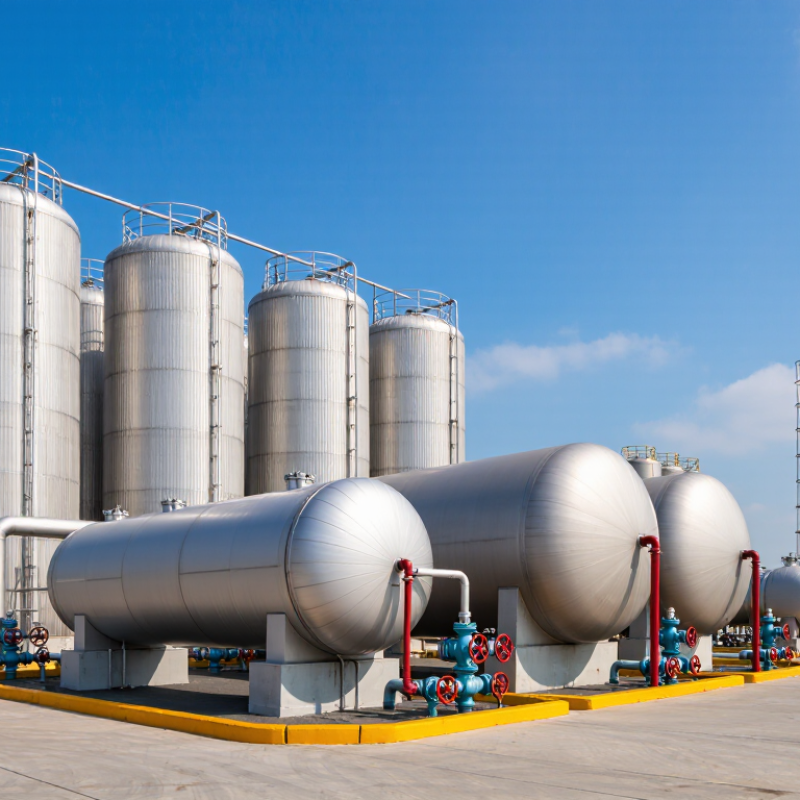
Cryogenic Gas Storage Tanks: Definition, Types, and Core Applications
Cryogenic Gas Storage Tanks: Definition, Types, and Core Applications
Cryogenic gas storage tanks hold liquefied gases below their boiling points.
LNG remains near -162°C, while
liquid oxygen stays near -183°C.
These temperatures require vacuum insulation, low-conductivity supports, and carefully selected metals.
Common designs include vertical atmospheric tanks, horizontal pressure vessels, and smaller transportable units.
Double-wall construction adds protection. The inner vessel stores the liquid, while the outer shell reduces heat transfer. According to the 2024 IGU World LNG Report, global LNG trade reached about 404.5 million tonnes in 2023. That volume increases demand for reliable receiving terminals and buffer storage.
Small details matter. A weak valve seal can increase boil-off losses.
Core applications include LNG fueling, oxygen supply, nitrogen blanketing, argon processing, and liquid hydrogen development.
Hospitals use oxygen tanks for continuous medical supply. Food processors use nitrogen for freezing and packaging. Electronics plants require extremely clean gases. The International Energy Agency’s Global Hydrogen Review 2024 identified rapidly expanding low-emissions hydrogen projects through 2030, but storage remains technically demanding. Hydrogen molecules are small and can challenge seals, fittings, and material selection.
Buyers should examine working pressure, net capacity, holding time, allowable boil-off, foundation loads, and inspection access.
Compliance with applicable pressure-vessel and fire-safety standards is essential. Yet specifications alone are not enough. A tank may pass factory testing and perform poorly on a dusty, uneven site. Experienced operators also review vent routing, emergency isolation, telemetry, and maintenance skills before installation.
Key Design Features and Performance Standards for 2026
For global buyers in 2026, cryogenic gas storage tanks should combine stable pressure control, low heat transfer, and dependable long-term operation. Vacuum-jacketed construction reduces thermal leakage around the inner vessel. Multilayer insulation helps limit product evaporation. Stainless steel or other qualified low-temperature materials must retain toughness during repeated cooling and warming cycles. The tank also needs accessible pressure relief devices, accurate level measurement, and clear isolation points.
Performance should be verified against recognized requirements, such as ASME BPVC Section VIII, EN 13458, ISO 21009, or ISO 20421, depending on the market and gas service. Buyers should confirm the current edition and local approval process. Key evidence includes weld records, non-destructive examination, pressure testing, vacuum stability data, and material traceability. Boil-off rate matters, but test conditions must be stated clearly. A low figure without temperature and filling details proves little.
Tips: Request a complete data sheet, not a sales headline. Check emergency vent routing and foundation loads. Ask how insulation performance changes after transport. Field inspections often find small valve-access problems that drawings miss. No tank is perfect. Even strong specifications can overlook operator habits, maintenance space, or seasonal temperature changes. A practical review should compare rated capacity with usable capacity, delivery routes, installation limits, and the actual gas withdrawal pattern. That extra questioning may feel slow, but it prevents expensive surprises.
2026 Best Cryogenic Gas Storage Tanks for Global Buyers
Key design reference: normal boiling points of commonly stored cryogenic gases at 1 atm
Design implication
Lower storage temperatures require suitable cryogenic materials, vacuum or multilayer insulation, controlled pressure relief, and carefully designed supports and piping.
Performance focus for 2026
Global buyers should compare thermal loss, holding time, allowable working pressure, inspection access, safety systems, and lifecycle maintenance requirements.
Relevant standards
Common reference frameworks include ASME BPVC Section VIII, EN 13458, ISO 21009, and API 625 where applicable. The governing code depends on vessel type, location, and service.
Values shown are approximate normal boiling points at standard atmospheric pressure. LNG is a mixture, so its actual boiling range varies with composition; methane is used as a reference.
Global Buyer Guide to Suppliers, Certifications, and Total Costs
Choosing the best cryogenic gas storage tank requires more than comparing vessel prices. The International Gas Union’s 2024 World LNG Report recorded global liquefaction capacity near 483 million tonnes per year in 2023. That scale increases demand for reliable storage, but local logistics still decide project economics.
Global buyers should verify ISO 21009-1, ISO 20421, or EN 13458 compliance, depending on vessel type and market. Request material certificates, pressure-test records, vacuum-performance data, and inspection procedures. Check the supplier’s experience with oxygen, nitrogen, argon, LNG, or hydrogen service. Different gases create different safety and temperature requirements. Small documentation gaps can become expensive delays.
Compare total delivered cost, not the factory quotation. Include ocean freight, inland transport, customs duties, foundations, vaporizers, valves, commissioning, and future inspection. Ask for expected evaporation rates and spare-part lead times. Energy losses can quietly exceed the initial price advantage. The IEA’s Global Hydrogen Review 2024 shows that low-emissions hydrogen remains a small share of global production, so hydrogen-ready equipment may involve higher costs and limited supplier capacity. A perfect comparison rarely exists. Buyers should record assumptions clearly, because regional permits and installation conditions can change the final budget.
Installation, Maintenance, and Lifecycle Management Best Practices
Global buyers should evaluate cryogenic gas tanks as lifecycle assets, not isolated vessels. The IEA’s Global LNG Outlook 2024 projects demand to approach 630 bcm by 2030. That growth increases pressure on storage reliability and maintenance quality.
Installation begins with a level foundation, verified anchoring, and clear separation from ignition sources. Confirm pressure-relief discharge routes before introducing product. Use oxygen-compatible materials where required. Commission slowly, recording cooldown rates, pressure changes, and vacuum performance. Thermal cycling can expose weaknesses that factory tests miss. That matters.
Maintenance teams should inspect relief valves, gauges, insulation, vacuum levels, weld areas, and external corrosion. Calibrate instruments against traceable references. Keep inspection records linked to tank age and operating hours. ISO 21009-2 provides useful guidance for stationary vacuum-insulated vessels, while EIGA guidance emphasizes controlled handling and contamination prevention. These documents support disciplined work, but local regulations still control final practice.
Tips:
Keep a small, approved spare-parts inventory. Review alarm history monthly. Test emergency isolation devices under controlled procedures. Train operators with realistic cold-surface scenarios. Do not treat stable pressure as proof of good insulation. A tank may look healthy while vacuum performance quietly declines. The weak point is often documentation, not steel. Review the lifecycle plan annually, including repair limits, sensor replacement, and decommissioning decisions.