Leave Your Message

Top Cryogenic Air Separation Unit Manufacturers Worldwide

Cryogenic Air Separation Unit technology sits quietly behind modern steel mills, semiconductor fabs, hospitals, and hydrogen projects. It separates atmospheric air into oxygen, nitrogen, and argon at extremely low temperatures. The process is demanding. A small efficiency loss can affect energy bills, product purity, and plant reliability.

Market estimates show sustained industrial demand. MarketsandMarkets projects the global air separation plant market to grow from approximately USD 5.8 billion in 2023 to more than USD 7.4 billion by 2028. Grand View Research reports a similar expansion trend, although its market boundaries differ. These variations matter. They remind readers that rankings are not perfectly comparable.

Benoît Potier, former chairman and chief executive of Air Liquide, stated, “Our industry is at the heart of the energy transition.” His observation fits today’s Cryogenic Air Separation Unit market. Oxygen supports cleaner steelmaking and chemical production. Nitrogen protects food, electronics, and sensitive industrial processes. Argon remains essential for welding and specialty manufacturing.

This guide examines leading manufacturers worldwide through practical criteria. These include installed capacity, energy performance, operating experience, safety systems, maintenance support, and documented customer references. Public annual reports from Linde, Air Liquide, and Air Products provide useful evidence. Independent research adds market context. Still, some supplier data remains confidential.

That gap deserves attention.

A strong manufacturer is not always the largest one. Local service coverage, spare-parts access, control-system expertise, and proven uptime can matter more than publicity. The following overview therefore offers informed comparisons, not an absolute verdict.
Top Cryogenic Air Separation Unit Manufacturers Worldwide

What Is a Cryogenic Air Separation Unit?

A cryogenic air separation unit, or ASU, separates atmospheric air at very low temperatures. It compresses and cleans the air before cooling it near liquefaction. Distillation then separates nitrogen, oxygen, and argon according to their boiling points. Oxygen boils at about −183°C, while nitrogen boils at −196°C. These small differences drive the process.

Large ASUs can produce thousands of tonnes of oxygen daily. The World Steel Association reported 1.89 billion tonnes of crude steel production in 2023. This scale helps explain the continuing demand for reliable oxygen supply. The International Energy Agency’s Global Hydrogen Review 2024 also recorded global hydrogen demand near 97 million tonnes in 2023. Refining and chemical facilities often need industrial gases alongside hydrogen systems. Yet, capacity alone does not guarantee efficiency. Electricity consumption, cooling-water design, startup time, and product purity can change operating costs significantly.

Tips: Check the required oxygen purity, pressure, and flow profile before selecting equipment. Ask for verified power-consumption data at actual operating loads. Inspect compressor vibration controls and backup systems. A useful detail is often missed: seasonal air temperature affects performance. Site conditions deserve careful review. No design is perfect. Engineers should compare modeled results with measured plant data, because optimistic assumptions can survive too long in procurement documents.

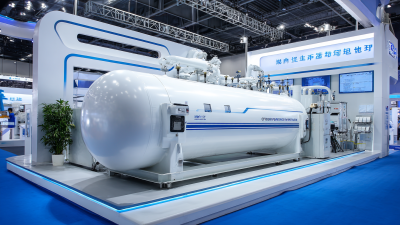
How Cryogenic Air Separation Technology Works

Top Cryogenic Air Separation Unit Manufacturers Worldwide
How Cryogenic Air Separation Technology Works

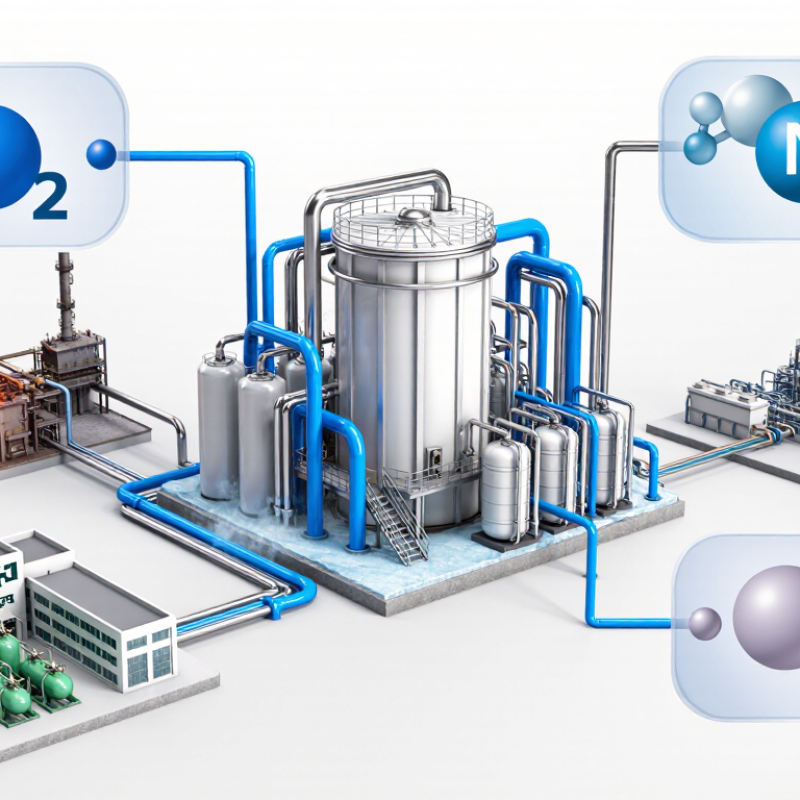
Cryogenic air separation units divide atmospheric air into oxygen, nitrogen, and sometimes argon. The process begins with a compressor, which raises the air pressure before purification. Filters remove dust, oil traces, carbon dioxide, and water vapor. This step matters because frozen contaminants can block narrow passages inside the cold equipment.

Clean air then enters a brazed aluminum heat exchanger. Returning product gases cool the incoming air, improving energy efficiency. Expansion turbines reduce the temperature further, often below -180°C. The air becomes partly liquid. It is then separated inside distillation columns, where nitrogen rises more easily and oxygen collects lower down. Argon requires an additional separation section because its boiling point sits close to oxygen’s. Precise control is essential.

Small temperature changes matter.

Operators monitor pressure, purity, flow, and vibration continuously. In practical facilities, stable operation depends on insulation, instrument calibration, and disciplined maintenance. A damaged valve or wet filter can disturb production surprisingly quickly. Cryogenic systems also consume substantial electricity, so designers study compressor efficiency and heat recovery carefully. The technology is mature, but it is not effortless. Real plant conditions rarely match a perfect simulation. Feed-air changes, startup delays, and imperfect sensors still demand experienced judgment. Reliable production comes from combining proven thermodynamics with cautious operation and regular inspection.

Key Criteria for Comparing Global ASU Manufacturers

Comparing global cryogenic air separation unit manufacturers requires more than checking oxygen capacity. Buyers should examine purity, production stability, energy use, and equipment availability. A practical review may compare a 10,000 Nm³/h oxygen unit under the same ambient conditions. Ask for measured power consumption, not only design estimates. Operating references from similar climates provide stronger evidence than attractive brochures.

Engineering depth also matters. Review cold-box insulation, compressor efficiency, control-system response, and turndown performance. Check how the unit behaves during startup, load changes, and short power interruptions. Measure the details. Safety design, inspection records, and compliance with recognized international standards should be independently verified. Maintenance access is equally important. A difficult valve replacement can create costly downtime years later.

Supplier reliability depends on people as much as machinery. Examine commissioning records, operator training, spare-parts planning, and regional service coverage. Speak with plant managers who have operated comparable systems for several years. Real plants are less tidy. I would not trust a polished brochure alone. Total ownership cost should include electricity, cooling water, planned overhauls, software support, and lost production risk. No scorecard is perfect, so buyers should record uncertain assumptions and test them through site visits, performance guarantees, and transparent technical discussions.

Top Cryogenic Air Separation Unit Manufacturers Worldwide - Key Criteria for Comparing Global ASU Manufacturers

Comparison Dimension Industry-Validated Reference Data What to Compare Among Suppliers Why It Matters
Separation Technology Cryogenic distillation is the established technology for producing large quantities of oxygen, nitrogen and argon from atmospheric air. Double-column or integrated-column configuration, argon recovery method, process integration and operating flexibility. Technology selection affects product purity, recovery, energy consumption, start-up time and long-term stability.
Main Products An ASU can produce gaseous oxygen, liquid oxygen, gaseous nitrogen, liquid nitrogen and argon, depending on configuration. Required product slate, simultaneous production capability, liquid backup strategy and by-product recovery. The product mix determines equipment complexity, storage requirements and project economics.
Oxygen Purity Cryogenic ASUs commonly deliver oxygen in the approximate range of 95% to 99.5% by volume, with higher-purity designs available for specific applications. Guaranteed purity, impurity limits, product pressure, flow stability and oxygen recovery. Steelmaking, gasification, medical supply and chemical processes may require different oxygen specifications.
Nitrogen Purity Cryogenic nitrogen production can range from approximately 95% purity to 99.999% or higher, depending on the process design and customer specification. Nitrogen purity, residual oxygen level, delivery pressure, liquid production and turndown capability. Electronics, food processing, refining and inerting services have substantially different purity requirements.
Argon Recovery Argon is present in dry air at approximately 0.934% by volume and requires additional separation equipment for commercial recovery. Argon recovery rate, final purity, crude-argon purification, liquid argon production and operating complexity. Argon recovery can improve project value when demand exists in welding, metal production and specialty-gas markets.
Operating Temperature Normal boiling points are approximately −196°C for nitrogen, −186°C for argon and −183°C for oxygen at atmospheric pressure. Cold-box insulation, temperature control, material compatibility, cold start procedure and thermal cycling performance. Cryogenic reliability depends on controlling heat ingress, contamination and mechanical stress during operation.
Capacity Range Cryogenic units are used across industrial gas applications, from small packaged systems to very large plants producing thousands of tonnes of oxygen equivalent per day. Nameplate capacity, minimum stable load, expansion potential, liquid-to-gas ratio and seasonal performance. A plant should be sized for present demand while retaining economical operation during low-load periods.
Specific Power Consumption Power demand varies with product purity, delivery pressure, liquid production, ambient conditions and plant scale; air compression is normally the largest energy-consuming section. Guaranteed kWh per unit of product, compressor efficiency, pressure level, waste-gas expansion and energy-recovery features. Electricity frequently represents a major portion of the total operating cost of an ASU.
Product Delivery Mode Products may be supplied as compressed gas, refrigerated liquid or a combination of both. Pipeline pressure, liquid storage capacity, tanker loading, backup vaporization and emergency supply arrangements. Delivery configuration directly influences site availability and continuity of customer operations.
Automation and Control Modern ASUs generally use distributed control systems, safety instrumented functions, online analyzers and remote performance monitoring. Control-system architecture, cybersecurity, analyzer redundancy, alarm management, data access and remote diagnostics. Advanced controls improve stability, reduce operator workload and support predictive maintenance.
Safety Engineering Key hazards include oxygen enrichment, cryogenic exposure, high pressure, asphyxiation and hydrocarbon contamination. Hazard and operability studies, oxygen-clean design, relief systems, gas detection, hazardous-area classification and emergency procedures. Safety design is essential because oxygen-rich environments significantly increase combustion risk.
Materials and Cleanliness Aluminum alloys, stainless steels and other cryogenic-compatible materials are selected according to temperature, pressure and oxygen-service requirements. Material certificates, oxygen cleaning procedures, weld quality, inspection records and contamination-control practices. Material compatibility and cleanliness affect equipment integrity and oxygen-service safety.
Availability and Maintenance Continuous industrial ASUs are designed for high availability, but actual performance depends on redundancy, maintenance planning and site utilities. Availability guarantee, planned shutdown interval, critical-spare strategy, mean time to repair and local service coverage. Unexpected interruptions can affect downstream production and require costly backup gas supplies.
Project Execution A complete ASU project commonly includes process design, equipment supply, cold-box erection, utilities integration, commissioning and operator training. Engineering scope, delivery schedule, modularization, construction responsibility, commissioning plan and performance-test methodology. Clear scope boundaries reduce interface risks, schedule delays and unexpected capital expenditure.
Standards and Certification Relevant requirements may include pressure-equipment regulations, cryogenic-vessel standards, electrical codes, occupational safety rules and quality-management systems. Applicable local regulations, ISO 9001 quality systems, ISO 14001 environmental systems, ISO 45001 safety systems and documented pressure-equipment compliance. Compliance documentation supports permitting, safe operation and acceptance by international project owners.
Lifecycle Cost Total cost includes capital expenditure, electricity, cooling water, maintenance, spare parts, labor, backup supply and eventual refurbishment. Guaranteed performance basis, utility consumption, maintenance cost, spare-part pricing, warranty terms and expected service life. The lowest purchase price does not necessarily provide the lowest cost over the plant's operating life.
Environmental Performance ASUs do not chemically consume air during separation, but their carbon footprint is strongly influenced by electricity source, power consumption and cooling-system design. Energy intensity, renewable-power compatibility, waste-gas utilization, refrigerant selection, water use and emissions reporting. Lower energy consumption reduces operating cost and indirect greenhouse-gas emissions.

Leading Cryogenic ASU Manufacturers by Region

Cryogenic air separation unit manufacturers vary by region, project scale, and operating conditions. In North America, leading suppliers often emphasize modular plant design, remote monitoring, and dependable oxygen supply for steel, healthcare, and energy facilities. Their engineering teams usually have strong experience with large industrial sites, strict safety reviews, and long-term maintenance contracts. A useful evaluation includes compressor efficiency, startup time, spare-parts access, and the supplier’s record in similar climates.

European manufacturers are widely recognized for process integration and detailed energy management. Many designs focus on reducing power consumption through advanced heat exchangers, optimized distillation columns, and heat recovery systems. This matters when electricity prices remain unstable. Regional suppliers also tend to provide thorough documentation and lifecycle planning. However, technical paperwork alone does not prove field reliability. Visit an operating plant when possible. Listen for abnormal compressor vibration.

Asia-Pacific has become a major manufacturing center for cryogenic ASUs. Suppliers in this region often offer competitive project costs, flexible fabrication capacity, and solutions for rapidly expanding chemical, electronics, and metals markets. Local service coverage can be a major advantage, especially where remote sites need quick response. Middle Eastern manufacturers and engineering groups commonly focus on high-temperature operation, large gas demand, and integration with petrochemical complexes. Regional claims still require careful checking. Delivery promises may look impressive, yet commissioning support can be uneven. A dependable choice should combine tested equipment, qualified operators, transparent performance data, and accessible technical support. Small details matter.

Industry Applications and Future Developments of Cryogenic ASUs

Cryogenic air separation units support steelmaking, chemical processing, healthcare, food freezing, and electronics manufacturing. They separate oxygen, nitrogen, and argon through air purification, compression, cooling, and distillation. In a steel plant, oxygen supports furnace efficiency, while nitrogen protects hot metal from unwanted reactions. Hospitals require dependable oxygen purity and continuous supply. Small deviations can matter.

Experienced operators monitor compressor vibration, molecular sieve performance, column pressure, and product purity. Commissioning records often reveal problems that design documents overlook. Reliable plants also use independent testing, calibrated sensors, and documented maintenance schedules. These practices strengthen confidence across different operating conditions. Still, no design is perfect. Weather, power quality, and changing demand can expose weak assumptions.

Future cryogenic ASUs will likely combine better heat integration with advanced process control. Variable-speed equipment may reduce electricity use during partial-load operation. Digital twins can compare live data with expected performance, although models may miss rare equipment failures. Modular units could serve smaller industrial sites and remote facilities. Low-carbon power will become more important, but renewable supply can fluctuate sharply. Operators may need storage, flexible production, or backup systems. Hydrogen projects and carbon-management facilities may also increase demand for high-purity gases. The practical challenge remains clear: improve efficiency without making controls too complex for maintenance teams.