- Home
- About us
- Products
- Solutions
- News
- Contact us
Leave Your Message
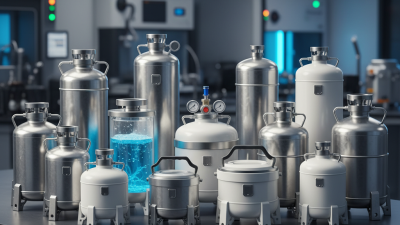
Choosing among China’s top cryogenic storage tank manufacturers takes more than comparing prices or polished product photos. A tank holding liquid nitrogen, oxygen, argon, or LNG must match its intended service, operating pressure, capacity, and site conditions. Cryogenic Storage systems also rely on effective insulation, sound welding, and carefully selected materials. Small differences matter.
This guide looks at how buyers can assess manufacturers, from engineering capability and production quality to documentation and after-sales support. Useful questions include whether a supplier can provide drawings, material traceability, inspection records, and details about vacuum-insulation performance. Ask how the company handles customization, testing, installation guidance, and spare parts. A low quotation may leave important details unclear.
Not every tank fits.
The strongest choice depends on the project, not a single ranking. A food-processing facility, a medical gas supplier, and an industrial plant may need different layouts and operating features. Buyers should verify specifications against their process requirements and consult qualified engineers before making a purchase. Manufacturer claims are useful starting points, but they should be supported by clear evidence. Even a well-built tank can become a poor choice if transport access, maintenance needs, or local operating conditions were overlooked. This comparison is designed to help readers ask sharper questions and identify suppliers whose capabilities align with real-world requirements. Some details are easy to miss. That is worth remembering.
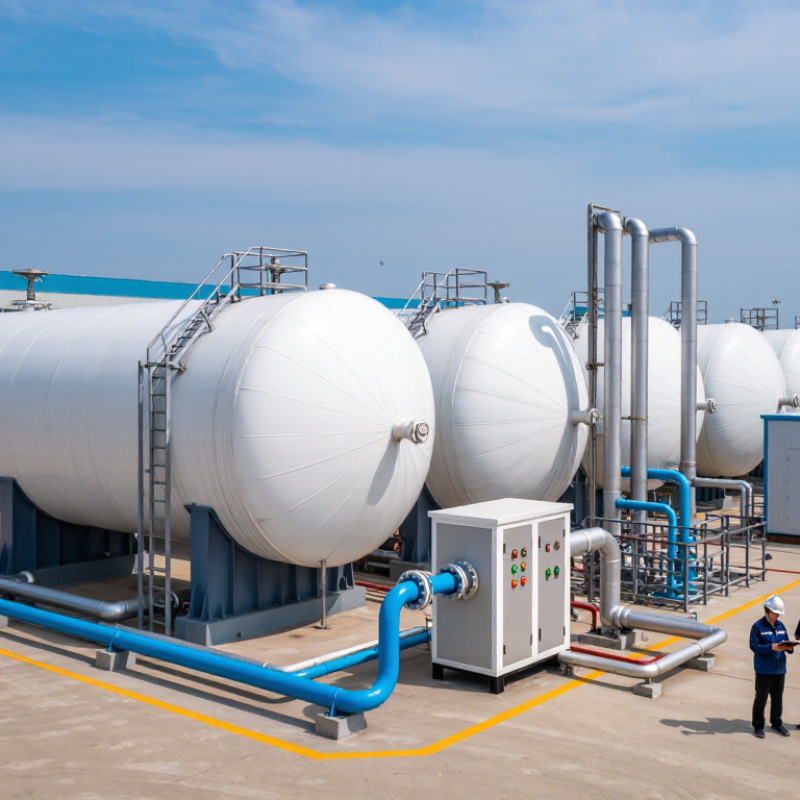
Cryogenic storage begins with temperature, but the design depends on the liquid and operating pressure. LNG is commonly stored near −162°C; liquid oxygen boils at about −183°C, and liquid nitrogen at about −196°C at atmospheric pressure. These rounded values align with NIST Chemistry WebBook data. LNG composition varies, so its exact storage temperature can vary too. Small details matter.
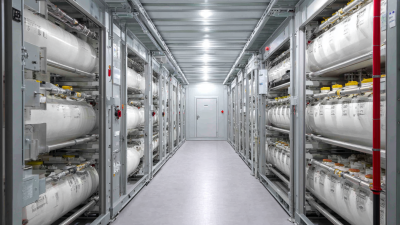
Tank construction changes with scale and service. Smaller systems often use vacuum-insulated, double-wall vessels to limit heat transfer. Large LNG terminals commonly use insulated, double-containment tanks designed for substantial inventory and controlled boil-off. Oxygen service needs materials and procedures compatible with oxygen; nitrogen systems must also manage pressure and safe venting. Similar temperatures do not make these tanks interchangeable.
Demand makes sound engineering consequential. GIIGNL’s Annual Report 2024 records global LNG trade of about 401.4 million tonnes in 2023. When assessing a Chinese tank manufacturer, buyers should examine design calculations, insulation performance, weld inspection records, pressure testing, and documented commissioning experience. Ask how boil-off and emergency relief are handled. A polished specification is not proof of field performance. Actual operating records matter.
| Cryogenic Fluid | Approx. Normal Boiling Point | Common Storage Tank Type | Typical Construction | Common Uses | Key Design Considerations |
|---|---|---|---|---|---|
| Liquefied natural gas (LNG) | −162°C | Large atmospheric storage tank; vacuum-insulated tank for smaller installations; membrane tank in some facilities | Large tanks commonly use a cryogenic inner container with an insulated outer structure. Inner-container materials may include 9% nickel steel, aluminum alloy, or membrane systems, depending on the design. | Natural-gas import and export terminals, gas-fired power supply, industrial fuel storage, and regasification facilities | Thermal insulation, boil-off gas handling, vapor containment, seismic loads, and secondary containment are important design factors. |
| Liquid oxygen (LOX) | −183°C | Vacuum-insulated pressure vessel for bulk supply; larger insulated tanks for high-volume sites | Typically a cryogenic inner vessel inside an outer jacket, with vacuum insulation and, in some designs, additional insulating material. | Hospitals, steelmaking, chemical processing, wastewater treatment, and aerospace applications | Oxygen-service cleanliness and compatible materials are essential. Keep oxygen equipment free of oils, grease, and other combustible contaminants. |
| Liquid nitrogen (LIN) | −196°C | Vacuum-insulated storage tank; smaller quantities may be held in insulated dewars | Common bulk tanks use an insulated inner vessel and an outer jacket designed to reduce heat transfer and manage pressure. | Food freezing, electronics manufacturing, metal processing, laboratories, and industrial inerting | Provide suitable pressure relief and ventilation. Nitrogen can displace oxygen, so enclosed areas may require oxygen monitoring. |
| Liquid argon (LAr) | −186°C | Vacuum-insulated bulk tank or insulated transport vessel | Usually stored in a double-wall cryogenic vessel with vacuum insulation; material selection depends on the vessel design and applicable code. | Metal fabrication, welding, semiconductor production, and scientific research | Argon is an asphyxiant at high concentrations. Ventilation, pressure protection, and safe transfer connections are important. |
| Liquid carbon dioxide (CO₂) | −78.5°C at atmospheric pressure; commonly stored as a refrigerated liquid under pressure | Refrigerated pressure vessel or pressure vessel, depending on the required storage conditions | Designed for the specified pressure and temperature range; insulation and refrigeration may be used for refrigerated bulk storage. | Food and beverage processing, industrial cooling, water treatment, and fire-protection systems | CO₂ storage conditions differ from atmospheric-pressure cryogenic liquids. Pressure, temperature, and dry-ice formation risks must be considered. |
Note: Boiling points are approximate values at one atmosphere. Actual tank configuration, materials, pressure, insulation, and safety systems depend on capacity, site conditions, applicable codes, and the fluid’s operating requirements.