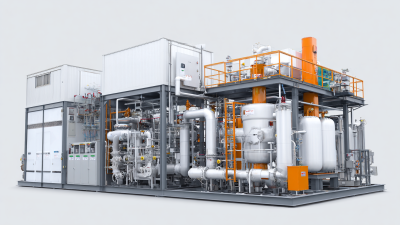
China Best Cryogenic Oxygen Plant Manufacturer?
Choosing the China Best Cryogenic Oxygen Plant Manufacturer requires more than comparing prices or advertised production capacity. A dependable supplier should demonstrate practical experience with air separation units, oxygen purity control, energy management, and long-term plant maintenance. These details affect daily performance. They also affect safety.
This guide examines how manufacturers design, build, and support a Cryogenic Oxygen Plant for hospitals, steel mills, chemical facilities, and industrial gas companies. Key factors include oxygen output, operating pressure, nitrogen and argon recovery, automation systems, compressor efficiency, and site conditions. A strong manufacturer should provide clear technical drawings, verified testing records, installation guidance, operator training, and responsive spare-parts support. Real project evidence matters more than polished brochures.
There is no universal “best” supplier. That claim needs careful review. A plant serving a medical center may need different purification controls from one supporting steel production. Buyers should compare purity stability, power consumption, commissioning results, warranty terms, and lifecycle costs. Factory visits and customer references can reveal practical weaknesses, including delayed service or difficult maintenance access. Small details matter. A poorly placed valve can slow routine inspection.
Reliable manufacturers explain limitations instead of hiding them. They also adapt equipment to local climate, electricity quality, feed-air conditions, and regulatory expectations. This article offers a balanced framework for evaluating Chinese suppliers. It considers engineering capability, quality assurance, documentation, after-sales service, and operating experience. The goal is not to promote a single company, but to support a safer and more informed purchasing decision.
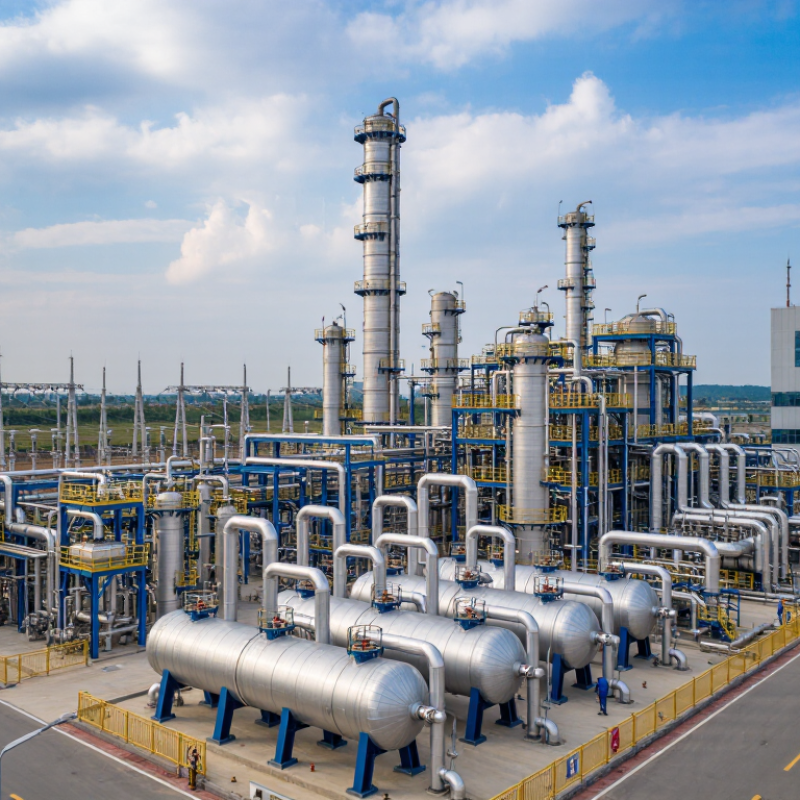
Cryogenic Oxygen Plant Basics: 20.95% Oxygen and 78.08% Nitrogen in Air
China Best Cryogenic Oxygen Plant Manufacturer?
Air contains about 20.95% oxygen and 78.08% nitrogen, with small amounts of argon, carbon dioxide, and moisture. A cryogenic oxygen plant separates these gases through cooling, purification, and distillation. The air first passes through filters and compression equipment. Molecular sieves remove water and carbon dioxide before deep cooling begins. Without proper pretreatment, ice or dry ice can block heat exchangers. That failure is expensive and dangerous.
At very low temperatures, air becomes liquid. Nitrogen boils at a lower temperature than oxygen, allowing controlled separation inside distillation columns. Experienced plant engineers monitor column pressure, temperature profiles, oxygen purity, and liquid levels continuously. A dependable manufacturer should provide process calculations, realistic capacity data, factory testing, operator training, and responsive service. Stainless steel piping, reliable instruments, and correctly sized valves also matter. In practice, small design mistakes can create unstable operation. I have found that promised efficiency often needs verification under actual site conditions.
Tips: Check feed-air quality, cooling-water conditions, altitude, and power stability before selecting equipment. Ask for oxygen purity records, energy-consumption figures, maintenance intervals, and emergency procedures. Do not judge a plant by appearance alone. Clear documentation is more valuable than polished sales language. Also, include room for future expansion, because oxygen demand may grow faster than expected.
Plant Capacity and Purity: 1,000–100,000 Nm³/h at 99.5%–99.999% Oxygen
Choosing the best cryogenic oxygen plant manufacturer starts with measurable performance, not polished claims.
A serious supplier should engineer systems from 1,000 to 100,000 Nm³/h, matching output to actual demand. At 99.5% oxygen, the plant may serve steel cutting or general industrial use. At 99.999%, trace impurity control becomes much more demanding. Each specification needs a test method, sampling point, and operating condition.
In practical projects, operators watch more than the oxygen analyzer. Air compressors, molecular sieves, heat exchangers, and distillation columns must remain stable through load changes. A cold box running near design flow should deliver consistent pressure, temperature, and purity. Moisture breakthrough can damage performance quickly. Reliable manufacturers provide commissioning records, calibration data, and maintenance procedures technicians can follow. Remote support helps, but trained site staff still matter.
Capacity is not a trophy.
Oversizing a 100,000 Nm³/h plant for a smaller facility can increase energy and idle losses. Undersizing a 1,000 Nm³/h unit may cause unstable operation during peak demand. Selection depends on feed-air conditions, elevation, utility costs, and future expansion. I would question any promise of 99.999% purity without discussing argon, nitrogen, and moisture limits. Real plants need adjustment time. Early estimates can be wrong, especially when demand data is incomplete. A transparent engineering review may be more valuable than the lowest quotation.
Safety and Compliance: ISO 9001, GB Standards, and Oxygen-Service Design
China Best Cryogenic Oxygen Plant Manufacturer?
Safety begins before commissioning.
ISO 9001 controls documented processes, but it does not certify oxygen-service safety by itself. The ISO Survey 2023 recorded 1,265,216 ISO 9001 certificates worldwide, showing broad adoption of quality systems. It does not guarantee clean piping or reliable shutdowns. Details matter.
A qualified cryogenic oxygen plant manufacturer should align equipment with applicable GB standards and oxygen-service design practices.
Stainless-steel lines, oxygen-compatible seals, degreased valves, and documented cleaning records reduce ignition risks. Relief devices must discharge safely, while alarms and interlocks should respond to abnormal pressure, temperature, and oxygen concentration. U.S. workplace guidance defines oxygen-enriched atmospheres as above 23.5 percent, a useful benchmark for ventilation and monitoring plans. The IEA’s Global Hydrogen Review 2024 also reports rapid growth in hydrogen production projects, increasing demand for dependable oxygen separation and handling systems. That growth raises expectations for traceability.
Factory acceptance tests should verify leak tightness, instrument calibration, emergency stops, and control logic.
Weld maps and material certificates should follow each pressure-bearing section.
During commissioning, operators need practical training, not only manuals. No design is perfect. Even experienced teams can overlook maintenance access or sensor drift.
Regular audits, incident reviews, and field feedback help correct those weaknesses before they become unsafe habits.
Supplier Selection: Lifecycle Cost, Delivery Time, Warranty, and Service Network
China Best Cryogenic Oxygen Plant Manufacturer?
Choosing a cryogenic oxygen plant should begin with lifecycle cost, not the purchase quote. The International Energy Agency reports that industry used about 37% of global final energy in 2022. Therefore, compressor efficiency, insulation quality, and oxygen recovery deserve close review. Ask for measured power consumption at your required oxygen purity and flow. Simulated figures are not enough.
Delivery time also needs evidence. UNCTAD’s Review of Maritime Transport 2023 states that ships carry over 80% of world merchandise trade by volume. Port congestion, customs clearance, and oversized equipment permits can still extend schedules. Request a manufacturing plan with inspection points, export documents, packing details, and commissioning milestones. A short promise may hide a long delay.
Warranty terms should cover performance, not only replacement parts. Define oxygen purity, production capacity, power use, vibration limits, and restart time. Require factory acceptance testing and site performance testing. ISO 9001:2015 supports controlled quality processes, but certification alone cannot prove plant reliability. Service distance matters too. A regional technician network can reduce downtime for valve faults, analyzer drift, or compressor trips. Spare parts should be listed with stock locations and response times. This is where many offers become vague. I would also request two operating references with similar climate and capacity, then verify them independently. A cheaper plant can become expensive after one difficult winter.
China Best Cryogenic Oxygen Plant Manufacturer? Supplier Selection Benchmark
A practical comparison of anonymized supplier profiles using four purchasing criteria: 15-year lifecycle cost, delivery time, warranty coverage, and service-network reach. Lower lifecycle cost and delivery time are better; higher warranty and service-network scores are better.
The comparison uses normalized procurement benchmarks rather than company or brand data. Lifecycle cost is shown in USD millions, delivery time in weeks, warranty in years, and service-network reach as the percentage of target regions covered within a standard service commitment.