How to Choose the Right Cryogenic Air Separation Unit?
Choosing the right Cryogenic Air Separation Unit (CASU) is critical for industries relying on oxygen, nitrogen, and argon. Dr. Alan McGregor, an expert in cryogenic technology, states, "The efficiency of a CASU can make or break the operational costs of a facility." This highlights the importance of making informed decisions.
In the world of industrial gases, the right CASU can enhance productivity and reduce expenses. Understanding key specifications, such as energy consumption and capacity, is paramount. Factors like the unit's scale and the specific gas requirements play essential roles. However, many still overlook these details, leading to costly mistakes.
Researching various technologies and manufacturers is necessary. The complexity of systems can be daunting. An ideal CASU should fit organizational needs while maximizing efficiency. Reflecting on your choices will help ensure optimal performance in the long run. Investing time in this process is crucial for success.
Understanding the Basics of Cryogenic Air Separation Units
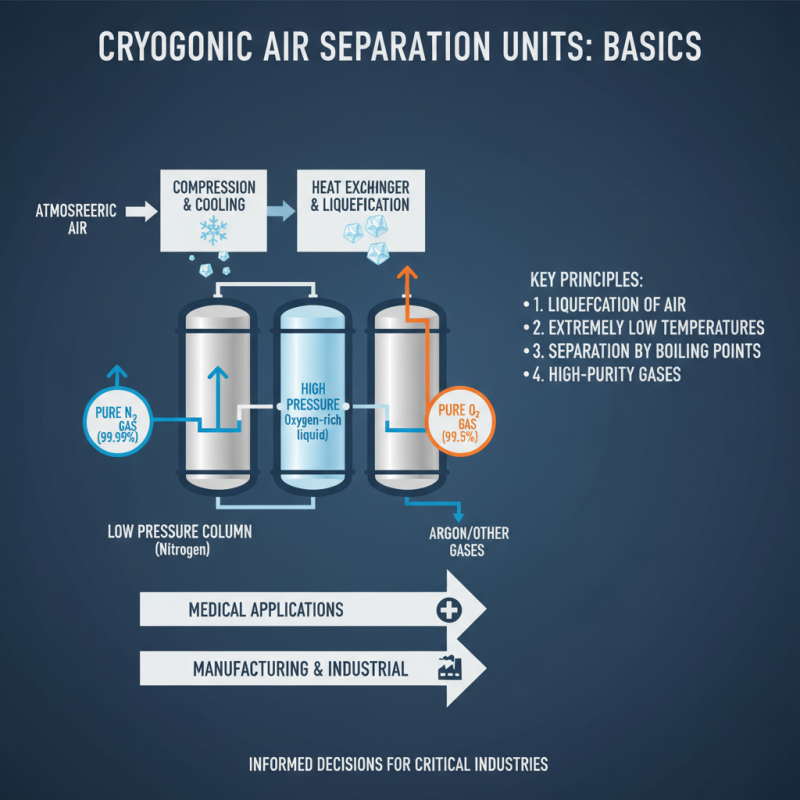
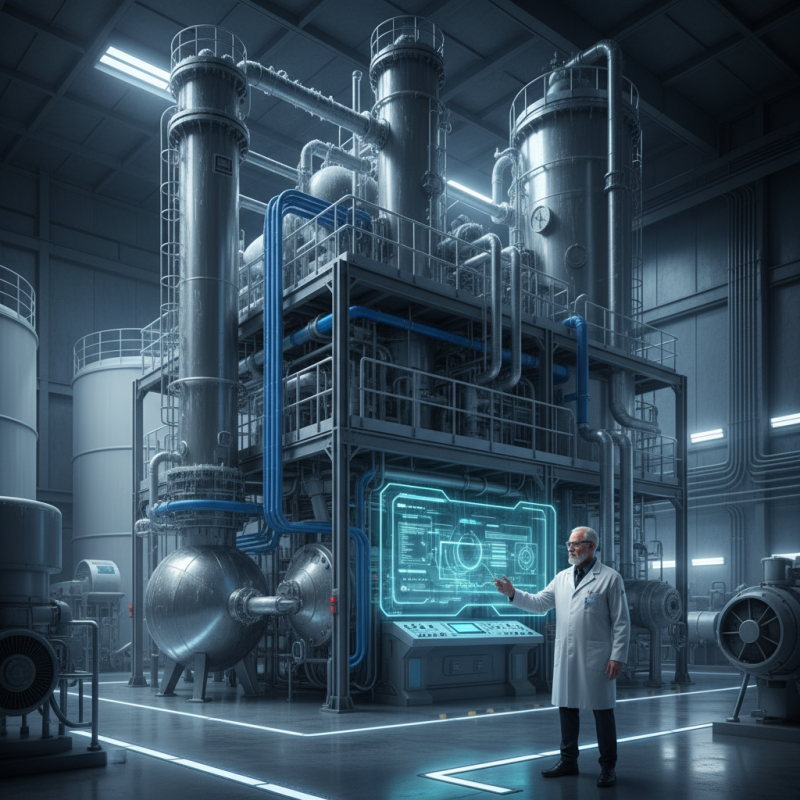
Cryogenic air separation units (ASUs) are vital for industries requiring pure gases, like nitrogen or oxygen. Understanding their basic principles can help users make informed decisions. These units rely on the liquefaction of air. When air is cooled to extremely low temperatures, its components separate based on boiling points. This process creates high-purity gases used in various applications, including medical and manufacturing sectors.
When selecting a cryogenic ASU, it's crucial to consider its operational efficiency. Efficient designs can significantly reduce energy consumption. Additionally, assessing the required production capacity is essential. A unit too small leads to inefficiency, while an oversized unit can waste resources. Always look for indicators of reliability, such as maintenance requirements and operational history.
Tips: When evaluating options, consult with industry experts. They can offer insights that help uncover potential pitfalls. Pay attention to the ASU's adaptability for future needs. A flexible design can accommodate changes in production demands. Furthermore, always review case studies or user testimonials to understand real-world applications better. Remember, learning from existing users provides perspective and can shape better choices.
Key Factors in Sizing Cryogenic Air Separation Units for Efficiency
When sizing cryogenic air separation units (CASUs), key factors impact overall efficiency. One crucial element is the unit's capacity. Efficiency often drops when the unit is significantly under or over its designed output. According to the International Gas Union's 2022 report, optimal sizing should align with demand forecasts within a ±10% range. Such precision minimizes operational issues and maximizes energy usage.
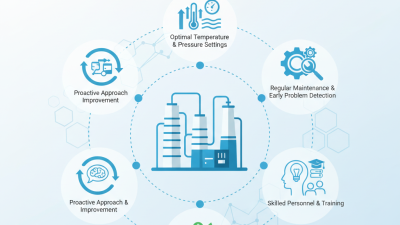
Thermal efficiency is another critical consideration. Studies indicate that CASUs achieve optimal performance when maintaining a specific temperature gradient. This ensures effective separation of nitrogen and oxygen. A report by the Cryogenic Engineering Conference highlights that maintaining an efficiency rate of over 90% is feasible when temperatures are controlled within ideal ranges. However, fluctuations can lead to inefficiencies that might not be addressed in initial designs, stressing the need for ongoing evaluations.
The choice of materials also bears significance. Materials should withstand cryogenic temperatures without losing integrity. A 2021 analysis from the American Society of Mechanical Engineers notes that improper material selection can reduce efficiency and increase maintenance costs. Frequent inspections can be beneficial, yet these can sometimes be overlooked, calling for a more holistic approach to unit design and operation.
Efficiency Factors in Cryogenic Air Separation Units
Evaluating the Purity Requirements for Oxygen and Nitrogen Output
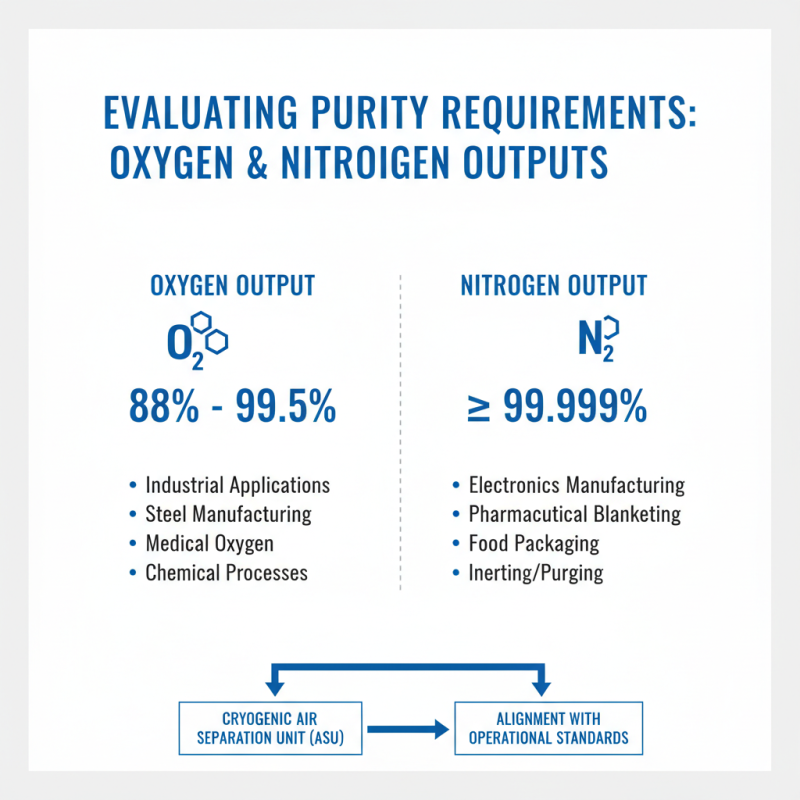
Choosing the right cryogenic air separation unit (ASU) hinges on understanding your purity requirements for oxygen and nitrogen outputs. Industries typically require oxygen purity levels of 88% to 99.5% for various applications. High-purity nitrogen is essential in electronics and pharmaceuticals, often needing purities of 99.999% or higher. Evaluating these specifications ensures that your ASU aligns with operational standards.
To assess purity needs effectively, industry reports suggest analyzing the specific application of gases. For example, medical oxygen requires stringent quality controls and certifications due to safety concerns. Meanwhile, food-grade nitrogen should meet specific food safety standards, impacting its production tolerances. A miscalculation in purity requirements can lead to inefficiencies and additional costs, underscoring the importance of careful evaluation.
**Tip:** Engage with experts to refine your gas purity needs. They can provide insights into industry standards and operational risks.
In the cryogenic field, realizing that purity demands may change over time is vital. Market dynamics and technological advancements can influence these shifts. Companies must be adaptable and willing to reassess their requirements. Regular audits and adjustments based on evolving processes are fundamental to ensuring sustained performance.
Comparing Technologies: Conventional vs. Advanced Air Separation Methods
When considering air separation technologies, understanding conventional versus advanced methods is crucial. Conventional air separation units typically use cryogenic processes. They cool air to extremely low temperatures, allowing for the separation of gases like oxygen and nitrogen. This method is time-tested and effective, but it often requires high energy input and extensive infrastructure.
Advanced air separation methods, on the other hand, utilize innovative technologies. These methods can include membrane separation and pressure swing adsorption. They tend to operate at ambient temperatures, which can save energy costs. However, the efficiency and purity levels of these systems may vary, requiring careful evaluation. The choice hinges on the specific requirements of the project, including purity needs and budget constraints.
It's important to weigh the pros and cons of each technology. Conventional methods are reliable but may be less flexible. Advanced methods are adaptable but might not yet be as established. The right choice is not always clear-cut. Assessing each method's capabilities against your operational goals will lead to a more informed decision.
How to Choose the Right Cryogenic Air Separation Unit?
| Technology |
Process Efficiency (%) |
Purity of Product (%) |
Energy Consumption (kWh/m3) |
Initial Cost ($) |
Maintenance Cost ($/year) |
Market Suitability |
| Conventional ASU |
75 |
99.5 |
0.9 |
500,000 |
50,000 |
Industrial Gases |
| Advanced ASU |
85 |
99.999 |
0.7 |
750,000 |
30,000 |
Pharmaceuticals, Electronics |
| Membrane Separation |
65 |
98.5 |
1.2 |
300,000 |
20,000 |
Small Scale Applications |
| Cryogenic Distillation |
80 |
99.7 |
0.8 |
600,000 |
40,000 |
Large Scale Production |
Cost Analysis: Capital and Operational Expenses of Cryogenic Units
When considering a cryogenic air separation unit (ASU), understanding the cost implications is vital. Capital expenditures can be substantial. A standard cryogenic ASU can range from $1 million to over $10 million, depending on capacity. For facilities producing large volumes of gases, the costs can increase significantly. Yet, operational expenses also play a crucial role. These include energy, maintenance, and labor costs.
Energy consumption is a major ongoing expense. Cryogenic units typically consume 0.9 to 1.5 kWh per cubic meter of air processed. Thus, facilities must anticipate electricity costs. Regular maintenance is essential for optimal operation. Data suggests that annual maintenance costs can reach 2% to 5% of total capital investment.
Reflecting on these figures reveals the complexity in budgeting for cryogenic ASUs. Many operators may overlook the balance between initial costs and ongoing operational expenses. An underestimation can lead to financial strain. Thorough cost analysis should include both capital and operational perspectives. The objective is to ensure reliable operations without unexpected financial burdens.