- Home
- About us
- Products
- Solutions
- News
- Contact us
Leave Your Message
Choosing among China’s top Cryogenic Helium Refrigeration suppliers requires more than comparing catalogue prices. These systems support MRI facilities, superconducting laboratories, particle physics, quantum research, and industrial gas applications. Each environment places different demands on cooling capacity, helium recovery, vibration control, operating pressure, and maintenance access.
A reliable supplier should provide measurable performance data, clear technical drawings, factory testing records, and traceable component information. Look for experience with pulse tube refrigerators, helium compressors, cold heads, vacuum vessels, and integrated recovery systems. Site references matter. A supplier that has supported installations similar to yours may understand practical problems better than a company with impressive brochures.
The evaluation should also examine response time, spare-part availability, commissioning support, and operator training. Ask how performance changes under different ambient temperatures and partial loads. Request evidence of quality management and applicable safety compliance. Certifications help, but they do not replace engineering verification. The market is not uniform.
Some published specifications may use different test conditions, making direct comparisons difficult. That detail is easy to miss. Buyers should confirm cooling capacity, helium purity requirements, noise levels, maintenance intervals, and warranty limits in writing. An independent technical review can expose hidden costs before purchase. This guide introduces leading Chinese suppliers through a practical lens, balancing reported capabilities with real operating concerns. It does not assume the largest manufacturer is automatically the best choice. Careful verification remains essential.
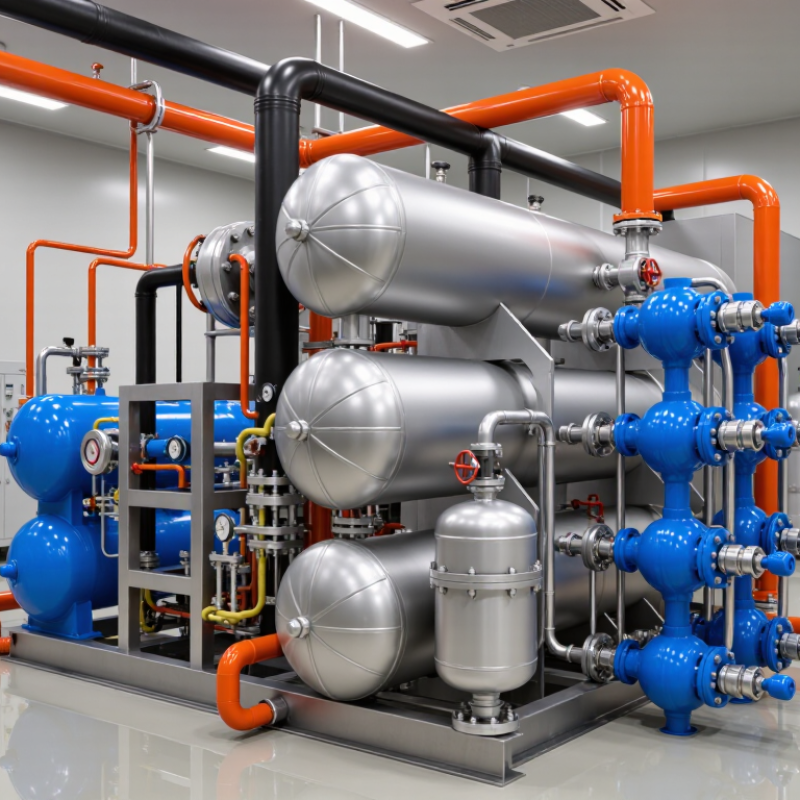
Cryogenic helium refrigeration removes heat at extremely low temperatures, often near 4.2 K. It liquefies helium or maintains superconducting equipment in a stable cold state. These systems support magnetic resonance imaging, particle research, quantum experiments, and high-field magnet testing. A small leak matters.
Core technology usually combines oil-free compressors, high-efficiency heat exchangers, expansion turbines, and Joule-Thomson valves. A Claude-cycle design can improve cooling efficiency through staged expansion. Helium purification is equally important because moisture or air can freeze inside narrow passages. Experienced suppliers in China should provide tested control systems, pressure protection, vibration data, and documented cooldown performance. Factory testing is useful, but site conditions can still change results.
Tips: Ask for cooling capacity at the actual operating temperature, not only the rated value. Check helium recovery connections, emergency shutdown logic, insulation quality, and service response time. Request maintenance records from comparable installations. A supplier may show impressive laboratory data, yet weak installation support can create costly delays. No system is perfect. Allow space for calibration errors, changing ambient temperatures, and operator learning. The best evaluation combines technical documents, witnessed testing, and practical discussions with engineers who maintain the equipment.
| Evaluation Dimension | Technical Data or Typical Range | Why It Matters | Common Application |
|---|---|---|---|
| Definition | A cryogenic helium refrigeration system removes heat from helium or another cooled load at temperatures generally below 120 K, with advanced systems reaching approximately 4 K. | It distinguishes helium refrigeration from conventional industrial cooling systems. | Superconducting equipment, research cryostats, and low-temperature test facilities. |
| Normal Boiling Point of Helium | Approximately 4.22 K at standard atmospheric pressure. | This is the reference temperature for liquid-helium production and storage. | Liquid-helium plants, superconducting magnet cooling, and cryogenic laboratories. |
| Critical Temperature | Approximately 5.20 K; above this temperature, helium cannot be liquefied by pressure alone. | The refrigeration cycle must provide sufficient precooling to approach or pass this operating region. | Helium liquefaction and sub-cooled helium circulation systems. |
| Temperature Range | Typical equipment spans approximately 4 K to 80 K; specialized systems may operate at higher temperatures for precooling. | The required temperature determines the cycle type, heat exchanger design, and insulation level. | Low-temperature physics, infrared detector testing, and cryogenic component qualification. |
| Primary Refrigerant | High-purity helium, commonly supplied at 99.999% purity or higher for demanding systems. | Moisture, oil, nitrogen, and hydrocarbon contamination can freeze and obstruct small passages. | Closed-loop helium refrigerators and helium liquefiers. |
| Cooling Cycle | Common configurations include Claude, Brayton, Joule–Thomson, Gifford–McMahon, pulse-tube, and Stirling cycles. | Cycle selection affects efficiency, vibration, maintenance, cooldown time, and final temperature. | Large helium plants, laboratory refrigerators, and compact cryocoolers. |
| Expansion Mechanism | Turboexpanders provide near-isentropic expansion; Joule–Thomson valves provide throttling; displacer systems support regenerative expansion. | The expansion method determines achievable efficiency and system complexity. | Industrial helium liquefaction and low-vibration cryogenic cooling. |
| Cooling Capacity | Small cryocoolers may provide fractions of a watt to several hundred watts at low temperatures; large plants can provide substantially higher refrigeration capacity. | Capacity must be matched to static heat leak, dynamic load, process losses, and cooldown requirements. | Detector cooling, magnet operation, liquefaction, and process testing. |
| Regenerative Heat Exchanger | Counterflow heat exchangers commonly use copper, aluminum, or specially engineered compact materials selected for high effectiveness and low pressure drop. | High effectiveness improves precooling and reduces compressor power. | Claude and Brayton refrigerators, helium liquefiers, and closed-cycle systems. |
| Compressor Requirements | Oil-lubricated compressors require effective oil removal; oil-free or oil-separated configurations are used where contamination control is critical. | Compressor cleanliness directly influences valve reliability, heat exchanger performance, and maintenance intervals. | Research facilities, medical imaging support systems, and industrial gas plants. |
| Vacuum Insulation | Multilayer insulation and vacuum jackets are commonly used to reduce radiation and gas-conduction heat loads. | Lower heat leak reduces operating power and improves temperature stability. | Cryostats, transfer lines, storage vessels, and superconducting systems. |
| Helium Recovery | Recovery systems collect evaporated helium for purification, compression, storage, and reuse. | Helium is a limited and relatively costly resource, so recovery can significantly reduce operating consumption. | Universities, hospitals, national laboratories, and high-use industrial facilities. |
| Control and Monitoring | Typical monitoring includes temperature, pressure, mass flow, vacuum level, compressor status, vibration, and helium purity. | Real-time control protects the cold head, improves stability, and supports preventive maintenance. | Automated cryogenic test stations and continuously operated refrigeration plants. |
| Vibration Level | Pulse-tube systems generally offer lower mechanical vibration at the cold stage than mechanically driven displacer systems. | Low vibration is important for precision measurements and sensitive optical or superconducting equipment. | Quantum experiments, sensor platforms, optical instruments, and precision detectors. |
| Supplier Qualification Criteria | Review temperature performance, cooling capacity, helium purity control, pressure limits, energy consumption, documentation, safety compliance, service capability, and spare-parts availability. | These factors provide a technology-based method for comparing suppliers without relying only on purchase price. | Procurement of laboratory, medical, research, and industrial cryogenic systems. |
| Safety Considerations | Key provisions include pressure relief, oxygen-deficiency monitoring, ventilation, emergency shutdown, electrical protection, and trained operating personnel. | Helium can displace oxygen in enclosed spaces, while cryogenic liquids can cause severe cold-contact injuries. | All installations handling compressed or liquefied helium. |
Note: Performance values are representative engineering ranges. Actual specifications depend on the refrigeration cycle, operating pressure, cooling load, ambient conditions, insulation design, and system configuration.