China’s cryogenic equipment sector has moved from low-cost fabrication toward precision engineering, digital monitoring, and integrated plant delivery. This article examines ten leading Cryogenic Refrigeration System manufacturers serving laboratories, healthcare, food processing, industrial gases, and energy applications. Their products may include screw compressors, turboexpanders, cold boxes, vacuum-insulated vessels, control systems, and complete refrigeration packages.
Performance matters more than polished brochures. A reliable system must maintain stable temperatures, limit heat leakage, manage pressure safely, and support practical maintenance. Engineers also examine energy consumption, materials, certification, response time, and lifecycle cost. Small details matter. A poorly sealed valve can waste valuable cooling capacity.
Steven W. Van Sciver, a respected cryogenic engineering professor and author, defines cryogenics as “the science and technology of temperatures below 123 K.” That boundary explains why ordinary refrigeration experience is not enough. At these temperatures, metals contract, lubricants behave differently, and moisture can freeze inside critical passages. The manufacturers discussed here are assessed through technical capability, production experience, application range, quality systems, and customer support.
Still, no ranking can represent every project or region. Public information is sometimes incomplete, and supplier strengths may change with new investments. Buyers should verify test records, reference installations, after-sales capacity, and compliance documents before making a decision. This guide is a practical starting point, not a substitute for engineering due diligence. The best choice is rarely the loudest name. It is the system that performs steadily when temperatures fall, workloads rise, and mistakes become expensive.
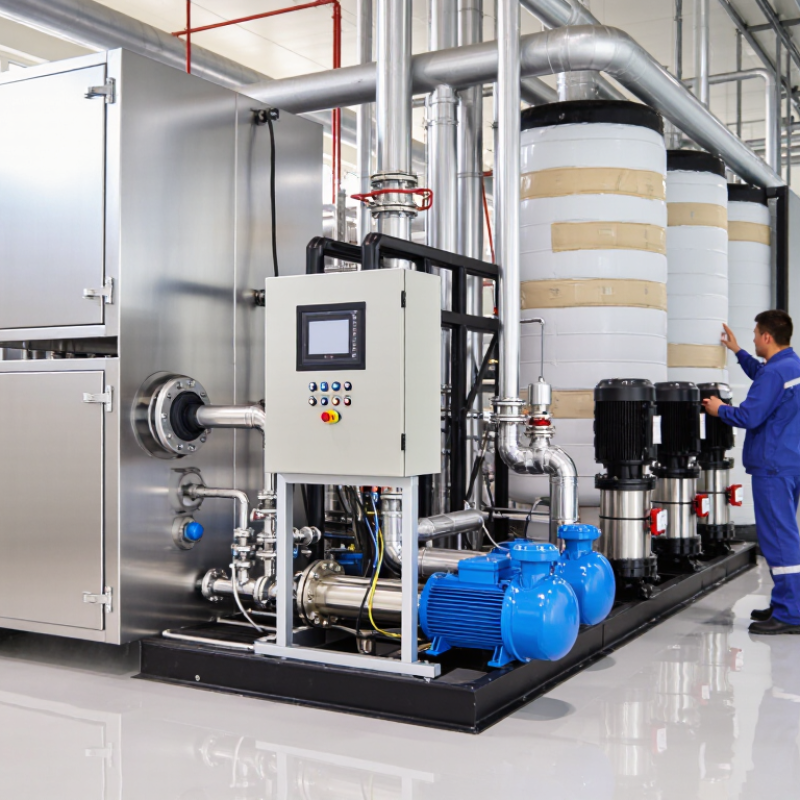
Cryogenic refrigeration systems create and maintain extremely low temperatures, commonly below −150°C.
Their scope extends beyond a single cooling machine. It includes compressors, heat exchangers, expansion devices, cold boxes, insulation, storage vessels, sensors, and control software. These systems support gas separation, medical cooling, scientific research, food freezing, and industrial processing.
A practical definition depends on the process requirement.
Some systems liquefy nitrogen, oxygen, or natural gas, while others only preserve a stable low-temperature environment. The design must manage heat leakage, pressure changes, vibration, and material brittleness. Vacuum-jacketed pipes reduce thermal loss. Multi-layer insulation helps, but it is not perfect. Small installation gaps can weaken overall efficiency.
When evaluating manufacturers in China, buyers should examine the complete system boundary, not only advertised temperature data.
Reliable evidence includes factory testing, verified operating records, pressure protection, control accuracy, maintenance access, and documented materials.
Engineers should also check local codes and site conditions before comparing suppliers. A compact design may save floor space but complicate repairs. That trade-off deserves attention.
Cryogenic performance can look impressive in a laboratory, yet field reliability depends on commissioning quality, operator training, and continuous monitoring.
China Top 10 Cryogenic Refrigeration System Manufacturers
Selection Criteria for China’s Leading Manufacturers
Selecting a leading Chinese cryogenic refrigeration manufacturer requires more than comparing prices. Buyers should examine project experience with nitrogen, oxygen, helium, or liquefied natural gas systems. Proven suppliers can explain cooling loads, operating temperatures, insulation methods, and expected maintenance intervals. Technical answers should include measurable data, not broad promises.
Look closely at engineering control and production quality. Review ISO 9001 procedures, material certificates, weld inspection records, and pressure testing reports. Ask whether key components are traceable from procurement to final assembly. A factory visit can reveal practical details, such as clean assembly areas, calibrated instruments, and protected storage for valves. It can also expose weaknesses.
Field support matters.
Evaluate commissioning plans, spare-parts availability, remote diagnostics, and response times for urgent faults. Request references from facilities with similar temperature ranges and running hours. Energy consumption deserves careful attention, because a low purchase price may hide higher operating costs. Compare guaranteed performance under defined conditions, including ambient temperature and load variation.
No shortlist is perfect. A polished presentation does not prove long-term reliability. Buyers should verify certificates independently and inspect a working installation when possible. Some manufacturers may provide excellent equipment but limited overseas support. Others may communicate well yet lack experience with complex refrigerant integration. A balanced assessment should record these gaps instead of ignoring them.
| No. | Selection Criterion | What to Verify | Relevant Technical Benchmark | Suggested Weight | Why It Matters |
|---|---|---|---|---|---|
| 1 | Cryogenic Temperature Capability | Documented operating temperature, cooling capacity, pull-down time, and temperature stability. | Typical cryogenic reference points include liquid nitrogen at approximately −196°C, liquid oxygen at approximately −183°C, liquid argon at approximately −186°C, LNG at approximately −162°C, and liquid helium at approximately −269°C. | 15% | Confirms that the system is suitable for the intended gas, process, or laboratory application. |
| 2 | Product Portfolio | Availability of cryocoolers, cold boxes, gas liquefaction units, refrigeration skids, heat exchangers, and control systems. | A complete solution should define cooling method, refrigerant or process gas, rated capacity, operating pressure, and heat-load conditions. | 10% | A broader portfolio can reduce integration risks when multiple cryogenic subsystems are required. |
| 3 | Pressure-Vessel and Piping Compliance | Material certificates, welding procedures, non-destructive testing, pressure testing, and design calculations. | Common reference frameworks include GB/T 150, EN 13445, ASME Section VIII, and applicable local pressure-equipment regulations. | 14% | Cryogenic equipment operates under demanding pressure, thermal-contraction, and material-compatibility conditions. |
| 4 | Quality Management | Valid quality-management certificates, traceability procedures, inspection plans, and corrective-action records. | ISO 9001 certification should be current, issued for the relevant manufacturing scope, and independently verifiable. | 10% | Formal quality controls help maintain consistent performance across custom-built systems. |
| 5 | Thermal Insulation and Vacuum Performance | Insulation construction, vacuum level, leak-rate data, boil-off performance, and thermal-cycle test results. | ISO 21010 provides a relevant framework for cryogenic vessels and equipment regarding gas and material compatibility. | 12% | Effective insulation reduces heat ingress, product loss, operating cost, and safety exposure. |
| 6 | Energy Efficiency | Specific power consumption, coefficient of performance where applicable, compressor efficiency, and heat-recovery options. | Performance should be compared at identical inlet conditions, outlet temperatures, flow rates, and ambient temperatures. | 12% | Energy use is often a major part of the lifecycle cost of continuous cryogenic refrigeration. |
| 7 | Safety Engineering | Relief devices, oxygen-deficiency monitoring, ventilation, emergency shutdown, alarms, and hazardous-area requirements. | Safety design should address oxygen enrichment, oxygen deficiency, overpressure, embrittlement, and cryogenic-burn hazards. | 12% | Correct hazard controls are essential for personnel protection and regulatory approval. |
| 8 | Testing and Acceptance | Factory acceptance testing, site acceptance testing, performance curves, calibration records, and commissioning procedures. | Acceptance criteria should cover capacity, temperature stability, pressure, vacuum integrity, alarms, and shutdown functions. | 8% | Documented testing converts design claims into measurable and auditable performance. |
| 9 | Customization and System Integration | Engineering support for utilities, electrical interfaces, PLC or SCADA communication, foundations, layout, and local codes. | Integration documents should include P&IDs, control narratives, instrument lists, electrical drawings, and interface schedules. | 4% | Proper integration improves installation efficiency and reduces commissioning delays. |
| 10 | After-Sales Support and Lifecycle Cost | Warranty terms, spare-parts availability, response time, remote diagnostics, maintenance intervals, and operator training. | Evaluate total cost of ownership using purchase price, energy consumption, maintenance, consumables, downtime, and expected service life. | 3% | Reliable service and parts support help preserve system availability throughout its operating life. |
| Total Recommended Evaluation Weight | 100% | Use verified technical documents, test records, certificates, and project references when comparing suppliers. | |||
China’s cryogenic refrigeration sector includes large industrial groups, specialist fabricators, and engineering integrators. The ten profiles below focus on practical capabilities rather than promotional claims. Company One develops low-temperature systems for gas separation and laboratory applications. Its engineers emphasize stainless-steel piping, vacuum insulation, and stable control loops. Company Two serves medical facilities, where quiet operation and dependable storage matter. Small details matter. Door seals, alarm response, and backup power can decide performance during a long night.
Company Three builds packaged units for food processing and cold-chain sites. Company Four focuses on customized skids for chemical and energy projects. Company Five supplies compact systems for research centers, but its documentation may require closer review.
Company Six combines refrigeration hardware with remote monitoring and maintenance planning. Company Seven has experience with helium and nitrogen applications, where leakage control demands disciplined testing. Company Eight produces heavy-duty equipment for high-throughput industrial plants.
Company Nine supports export projects through multilingual manuals and factory acceptance testing. Company Ten works mainly as an engineering integrator, matching compressors, heat exchangers, valves, and control software.
A credible supplier should show test records, pressure-vessel compliance, service capacity, and traceable component data. Site visits reveal more than polished brochures. In practice, temperature stability can change with ambient heat, operator habits, and maintenance quality. Not every listed capability fits every project.
Buyers should compare cooling load, operating temperature, refrigerant choice, noise limits, and lifecycle cost. One weakness remains common: after-sales response may be less consistent outside major Chinese cities. That point deserves direct questioning.
China’s top 10 cryogenic refrigeration system manufacturers are competing through engineering depth, not simple cooling capacity. The International Institute of Refrigeration reports that refrigeration uses about 20% of global electricity. This makes compressor efficiency, insulation quality, and heat recovery commercially important. Core technologies include Claude cycles, Stirling engines, mixed-refrigerant systems, vacuum insulation, and intelligent control platforms. Typical products include liquid nitrogen generators, oxygen and argon plants, cryogenic freezers, storage tanks, and transport units.
MarketsandMarkets estimates the cryogenic equipment market could grow from about USD 22.4 billion in 2024 to USD 30.5 billion by 2029. China’s suppliers serve hospitals, semiconductor fabs, food processors, chemical plants, laboratories, and hydrogen projects. A modern system may hold temperatures below -150°C while monitoring pressure, oxygen concentration, vibration, and leakage. Reliable manufacturers also provide commissioning, preventive maintenance, spare parts, and operator training. Hardware alone is not enough.
Real operating conditions expose weaknesses. Door openings, humid air, unstable power, and poor pipe insulation can reduce efficiency quickly. Small details matter. Independent testing should verify cooling curves, energy consumption, noise, and emergency performance. The claimed coefficient of performance may not match field results. This gap deserves more attention. Buyers should compare measured data under identical loads, rather than relying only on catalog figures. Applications also differ: a medical freezer needs stable temperature recovery, while a gas separation plant prioritizes continuous operation and process purity. Their designs should never be evaluated by capacity alone.
The chart compares representative cryogenic products and applications by their normal boiling points at approximately 1 atmosphere. Lower temperatures indicate greater refrigeration requirements and more demanding insulation, compression, expansion, and process-control technologies.
China’s cryogenic refrigeration market includes manufacturers with different strengths, capacities, and engineering approaches. Comparing the top ten requires more than checking price or production scale. Review cooling range, refrigeration capacity, temperature stability, energy use, and delivery experience. A reliable manufacturer should provide test records, material certificates, and clear maintenance procedures.
In practical evaluations, inspect how each supplier handles insulation, vacuum performance, control systems, and emergency alarms. Ask for references from facilities with similar gas, medical, food, or laboratory requirements. Factory visits can reveal details that brochures hide, such as pipe finishing, cleanliness, and testing discipline. However, no comparison is perfect. Published performance may differ under local humidity, load changes, or installation conditions.
Tips
Prepare a technical checklist before requesting quotations. Compare the same operating temperature, cooling load, refrigerant conditions, warranty period, and spare-parts response time. Confirm whether engineers support commissioning and operator training. Ask for the expected electricity consumption at partial load, not only at full capacity. A low purchase price may create higher operating costs later. Some buyers, including experienced teams, still overlook control-system compatibility. That mistake can delay commissioning and increase modification costs.