Leave Your Message

How to Choose the Best Cryogenic Storage Solution?

Choosing the right Cryogenic Storage solution is more than comparing tank capacity or advertised holding time. It is a decision about sample safety, daily workflow, and long-term operational confidence. A well-matched system should protect valuable biological materials while remaining practical for trained staff to monitor and maintain.

Start with the samples. Their required temperature, container type, storage duration, and access frequency will shape the equipment choice. Liquid-phase storage may offer direct contact with cryogen, while vapor-phase systems can reduce cross-contamination concerns in some applications. However, neither option is automatically best. The correct decision depends on validated procedures, sample sensitivity, and facility conditions.

Look closely at measurable details. Ask about static evaporation rates, temperature uniformity, usable storage volume, alarm functions, and backup planning. A crowded rack can slow retrieval and increase handling errors. A poorly placed sensor can also create false confidence. Strong suppliers should provide technical documentation, service records, installation guidance, and clear emergency procedures. Independent testing or qualification data adds further credibility.

Small details matter.

Consider the room, too. Ventilation, oxygen monitoring, floor loading, access routes, and staff training can affect safe operation. Costs should include delivery, commissioning, maintenance, monitoring, and eventual replacement. The cheapest unit may become expensive when alarms fail or parts are unavailable. Still, specifications never tell the whole story. Real performance depends on disciplined use, routine inspections, and honest review after near misses. Before choosing, compare evidence, not promises, and ask whether the solution will remain dependable five years from now.

How to Choose the Best Cryogenic Storage Solution?

What Cryogenic Storage Is and Why It Matters

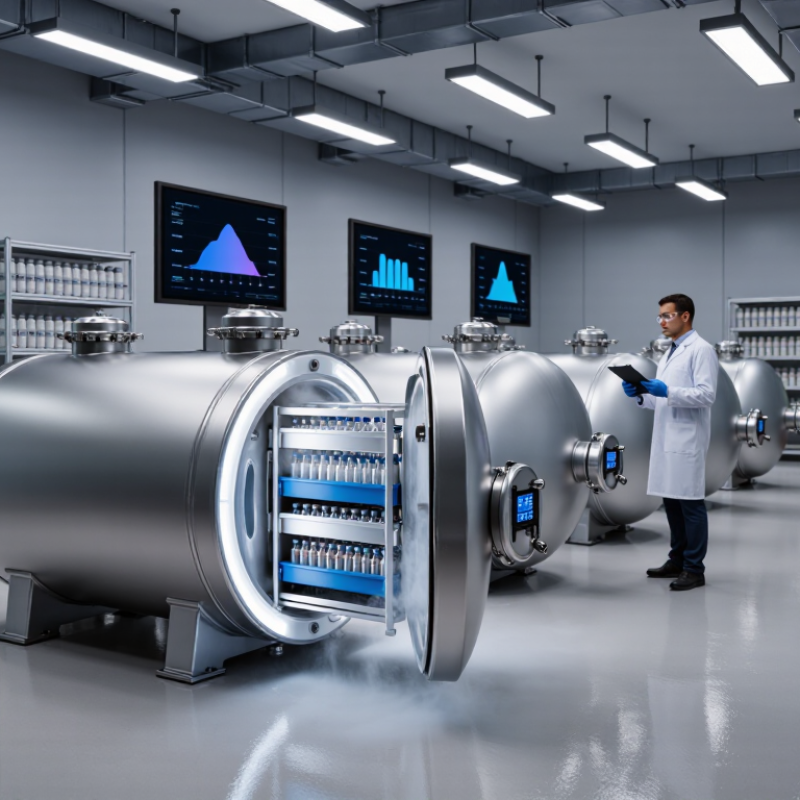
Cryogenic storage means preserving biological materials at extremely low temperatures, often below -150°C. At these temperatures, chemical reactions slow dramatically, protecting cells, tissues, reproductive samples, and some medicines from rapid degradation. A liquid-nitrogen vessel can maintain samples near -196°C without relying on a compressor. That sounds simple. It is not. The real purpose is stability over time, not merely coldness.

A suitable solution matches the sample type, storage duration, access frequency, and facility conditions. For long-term storage, vapor-phase systems can reduce direct contact with liquid nitrogen and limit contamination concerns. For frequently accessed samples, racks, clear labeling, and controlled inventory may matter more than maximum capacity. Temperature probes should be independent of the main controller when possible. Continuous alarms, backup power, and documented emergency procedures protect samples and staff. Small oversights become expensive.

Reliable practice also requires checking fill levels, inspecting seals, and recording temperature trends. A brief alarm test can reveal a failed sensor before a real loss occurs. Operators need training because frost, poor ventilation, and oxygen displacement create practical hazards. Room design matters, especially where nitrogen may accumulate unnoticed. No system is perfect. I would question any proposal promising zero risk or maintenance-free operation. Validated procedures, routine maintenance, and records reviewed by qualified personnel provide stronger protection than impressive specifications alone.

Which Cryogenic Materials and Samples Require Storage

When selecting a cryogenic storage solution, identify the sample before comparing equipment.

Biological materials often require storage at ultra-low temperatures. These include stem cells, blood components, reproductive cells, embryos, tissue sections, microbial cultures, and genetic material.

Proteins, enzymes, and sensitive research reagents may also need freezing to preserve activity. Each sample reacts differently to temperature changes, oxygen exposure, and repeated handling.

Living cells usually need stable temperatures and carefully controlled cooling rates. Tissue samples require sealed containers that limit moisture loss and contamination.

DNA and RNA may tolerate different conditions, but poor labeling can still ruin valuable work. Liquefied gases, superconducting components, and specialty materials create separate safety and compatibility concerns.

Containers must match the cryogenic fluid, pressure conditions, and intended storage period. A small mismatch matters.

Good practice includes temperature monitoring, backup power, inventory tracking, and clear emergency procedures.

Use labels that remain readable after frost and repeated handling. Keep storage areas ventilated, because cryogenic liquids can displace breathable air.

No checklist is perfect. One overlooked cap or delayed transfer can damage irreplaceable samples.

Reviewing actual handling habits may reveal weaknesses that equipment specifications never show. Samples should be grouped by risk, required temperature, recovery value, and access frequency.

How to Compare Cryogenic Storage Technologies and Containers

How to Choose the Best Cryogenic Storage Solution?

Comparing cryogenic storage technologies starts with the sample, not the container. Liquid-phase systems can maintain extremely low temperatures, but direct immersion may increase contamination concerns. Vapor-phase systems reduce that contact risk and often simplify sample handling. Mechanical ultra-low-temperature freezers avoid cryogens, yet they depend on continuous electricity and reliable cooling maintenance.

Container design matters just as much. A vacuum-insulated dewar suits smaller volumes and frequent transfers. Larger storage tanks support higher capacity, but they require more floor space and planned filling schedules. Check neck openings, rack compatibility, temperature uniformity, and maximum holding time. A box that fits today’s samples may restrict future expansion.

Use measurable criteria. Record daily boil-off, recovery time after opening, alarm response, and access frequency. Ask whether the monitoring system stores temperature history and sends alerts during power or pressure changes. Safety also needs attention. Proper ventilation, oxygen monitoring, staff training, and documented inspection routines should be part of the evaluation.

My own comparison would not rely on purchase price alone. Consumables, servicing, calibration, energy use, and emergency transfer capacity can change the real cost. No option is perfect. A highly efficient tank may become inconvenient when staff need rapid access. Run a small trial with representative racks before committing. Real handling often exposes weaknesses that specifications hide.

How to Choose the Best Cryogenic Storage Solution?

How to Compare Cryogenic Storage Technologies and Containers

Lower temperatures generally provide greater preservation capability but require more demanding insulation, ventilation, monitoring, and safety controls. Dry ice storage operates at approximately −78.5°C, while liquid-nitrogen vapor-phase systems typically maintain samples between −150°C and −190°C. Liquid-nitrogen liquid-phase storage is approximately −196°C, and liquid-helium systems can reach about −269°C. Actual performance depends on container design, opening frequency, sample load, ambient conditions, and replenishment practices.

How to Evaluate Capacity, Temperature Control, and Safety

How to Choose the Best Cryogenic Storage Solution?

Capacity should match both current samples and realistic growth. Count usable racks, boxes, and access space, not only the chamber’s advertised volume. A 2023 ISBER best-practice report stresses documented inventory control, temperature monitoring, and contingency planning for biobanks. Leave room for safe handling. An overcrowded chamber slows retrieval and increases exposure time. That detail is easy to underestimate.

Temperature control must fit the material, not the equipment budget. Liquid nitrogen systems operate near −196°C, while mechanical ultra-low systems commonly maintain about −80°C. The choice affects energy use, refill schedules, and recovery after door openings. WHO’s Laboratory Biosafety Manual recommends continuous monitoring, alarm testing, and clear response procedures. Set alarms before failure occurs. A temperature graph is more useful than a single daily reading.

Tips:

Compare usable capacity, recovery time, alarm visibility, backup power, and oxygen monitoring. OSHA identifies 19.5% oxygen as the minimum safe concentration for occupied areas, so ventilation and oxygen-deficiency alarms deserve careful review. Check whether staff can move heavy racks without awkward lifting. In practice, a perfect spreadsheet can still miss human error. Test the alarm at night, during a simulated outage, and after repeated door openings. The cheapest option may become expensive when samples, maintenance, or emergency transfers are counted.

How to Select a System for Long-Term Cost and Operational Needs

How to Choose the Best Cryogenic Storage Solution?

The right system should support long-term costs, not only the initial purchase. A low-price unit may consume more cryogen and demand frequent refilling. Over five years, those routine expenses can exceed the original savings. Compare capacity, evaporation rate, energy use, maintenance, and expected service life together.

Operational needs deserve equal attention. Measure daily access, sample volume, loading patterns, and available floor space before selecting equipment. A facility with frequent access may need organized racks, wide openings, and clear inventory tracking. Check alarm visibility, temperature monitoring, backup procedures, and staff training requirements. Small interruptions matter.

Reliability is practical, not decorative. Select equipment with documented performance data, accessible maintenance points, and responsive technical support. Confirm that critical samples remain protected during power loss or delayed deliveries. A written risk assessment can reveal hidden costs, including replacement parts, staff time, and emergency response. Still, no system fits every site. One useful specification may create another burden. Review real operating records, question optimistic estimates, and allow room for future capacity. The best choice is usually the one operators can maintain correctly for many years.

How to Choose the Best Cryogenic Storage Solution? - How to Select a System for Long-Term Cost and Operational Needs

Evaluation Dimension Liquid-Phase LN₂ Storage Tank Vapor-Phase LN₂ Storage Tank Mechanical Cryogenic Freezer Dry-Shipper Transport Container
Typical Operating Temperature Approximately −196°C, with samples immersed in liquid nitrogen. Generally below −150°C in the vapor space, depending on design, loading, and liquid level. Typically about −150°C to −190°C, depending on the system and operating mode. Usually below −150°C during validated holding periods; samples are cooled by absorbed liquid nitrogen rather than free liquid.
Primary Storage Principle Passive cryogenic storage using liquid nitrogen as the cooling medium. Passive cryogenic storage using the cold vapor above a liquid-nitrogen reservoir. Active refrigeration using a mechanical cryocooler, often with backup systems or thermal storage. Passive, vacuum-insulated transport or temporary storage with an absorbent material that retains liquid nitrogen.
Best-Fit Use Case
Typical Capacity Range Small research units may hold hundreds to several thousand cryovials; larger systems can hold many thousands. Small to large systems are available, commonly ranging from hundreds to tens of thousands of cryovial positions. Common laboratory configurations range from a few hundred to several thousand cryovial positions. Usually designed for tens to several hundred vials, depending on the canister and validated payload.
Temperature Uniformity Excellent when samples remain properly immersed; performance depends on liquid level and tank geometry. Good when the tank is correctly loaded and maintained; temperature can vary by rack height and liquid level. Controlled by sensors, airflow, shelving design, and compressor or cryocooler performance; mapping is required. Must be verified through a validated thermal profile for the intended payload and route.
Refilling or Recharging Requires regular liquid-nitrogen replenishment based on static evaporation rate, usage, lid openings, and ambient conditions. Requires regular liquid-nitrogen replenishment; efficient designs can reduce but not eliminate consumption. Normally does not require routine liquid-nitrogen refilling, but needs electrical power and scheduled servicing. Requires replenishment before use according to the manufacturer’s validated hold-time procedure.
Typical Hold-Time Consideration Hold time is determined by vessel size, evaporation rate, liquid level, and access frequency; it is not a fixed universal value. Hold time depends on tank volume, vapor-space design, liquid level, and access frequency. Can provide continuous operation while powered; backup capacity is necessary during power loss or equipment failure. Usually validated in days rather than months; actual duration depends on model, payload, handling, and transport conditions.
Main Recurring Cost Liquid nitrogen, delivery, storage infrastructure, safety checks, and periodic vessel maintenance. Liquid nitrogen, delivery, storage infrastructure, safety checks, and periodic vessel maintenance. Electricity, preventive maintenance, service contracts, replacement parts, and backup-power or backup-cooling provisions. Liquid nitrogen conditioning, logistics, inspections, return shipping, and validated packaging procedures.
Capital Cost Profile Generally moderate; larger capacity and automated filling increase initial cost. Generally moderate to high, depending on capacity, monitoring, access controls, and automation. Generally high because of the cryocooler, controls, insulation, installation, and facility requirements. Generally lower than a permanent storage system, but many units may be needed for high-volume programs.
Infrastructure Requirements Suitable room ventilation, oxygen-deficiency monitoring where required, liquid-nitrogen supply, and safe handling space. Suitable room ventilation, oxygen-deficiency monitoring where required, liquid-nitrogen supply, and safe handling space. Stable electrical supply, heat rejection or room cooling, alarm connectivity, service access, and emergency backup planning. Approved handling area, trained personnel, appropriate transport packaging, and route-specific shipping controls.
Power Dependence Low during normal operation; automated fill systems and monitoring still require power. Low during normal operation; automated fill systems and monitoring still require power. High; a prolonged power interruption can cause temperature rise unless backup cooling or emergency procedures are available. Low during normal use, although monitoring devices and logistics systems may require power.
Operational Labor Includes liquid-level checks, filling, inventory management, alarm response, and safe sample retrieval. Includes liquid-level checks, filling, inventory management, alarm response, and safe sample retrieval. Includes alarm response, preventive maintenance coordination, inventory management, and backup-readiness checks. Includes conditioning, packing, documentation, chain-of-custody control, and post-use inspection.
Monitoring Priorities Liquid level, temperature, fill status, lid position, oxygen concentration, and alarm communication. Liquid level, vapor temperature at representative locations, lid position, oxygen concentration, and alarm communication. Temperature, compressor or cryocooler status, power quality, door status, alarm communication, and backup condition. Internal temperature, shipment duration, impact or orientation where relevant, and validated hold-time margin.
Sample Access Fast access is possible, but frequent opening increases nitrogen loss and can expose samples to temperature variation. Good rack-based access; organized retrieval helps reduce lid-open time and unnecessary warming. Convenient access through drawers, shelves, or racks; access frequency can affect recovery time and energy use. Access is limited and should be minimized because opening the container reduces thermal hold-time margin.
Key Safety Considerations Asphyxiation risk from nitrogen displacement, extreme cold, pressure hazards, spills, and cryogenic burns. Asphyxiation risk, extreme cold, pressure hazards, spills, and cryogenic burns; vapor exposure must be controlled. Electrical, mechanical, refrigerant, and hot-surface hazards; temperature alarms and emergency procedures are essential. Asphyxiation risk during conditioning or enclosed-space handling, extreme cold, pressure hazards, and transport damage.
Environmental and Sustainability Factors Emissions are associated mainly with nitrogen production, liquefaction, delivery, and evaporation losses. Efficient insulation can reduce nitrogen consumption, but ongoing supply and evaporation remain relevant. Environmental impact depends on electricity source, efficiency, refrigerants, maintenance, and equipment life cycle. Impact is influenced by nitrogen use, packaging materials, transport distance, and container return logistics.
Failure Mode to Plan For Delayed delivery, low liquid level, lid left open, vacuum loss, sensor failure, or insufficient ventilation. Low liquid level, excessive access, temperature stratification, vacuum loss, sensor failure, or insufficient ventilation. Power failure, cryocooler or compressor failure, control-system fault, door left open, or inadequate backup capacity. Insufficient preconditioning, extended transit, damaged vacuum insulation, incorrect loading, or delayed delivery.
Long-Term Cost Outlook Often attractive where nitrogen supply is reliable and storage duration is long, but delivery and safety infrastructure must be budgeted. Often attractive for high-density storage with controlled access and moderate nitrogen consumption. May reduce recurring nitrogen logistics costs, but total ownership cost can rise through electricity, maintenance, and backup requirements. Economical for intermittent transport needs; less suitable as the primary solution for large permanent inventories.
Selection Recommendation
Important Validation Step Before purchase, compare total cost of ownership over the intended service life, including capacity utilization, nitrogen or electricity consumption, maintenance, monitoring, backup systems, labor, safety upgrades, and sample-loss risk. Validate temperature mapping, alarm response, recovery time, and business-continuity procedures under real operating conditions.