- Home
- About us
- Products
- Solutions
- News
- Contact us
Leave Your Message
A Super Cryogenic Refrigerator is judged by more than its lowest temperature. For quantum laboratories, the practical questions are how much cooling power remains at millikelvin temperatures, how quickly the system recovers, and whether wiring and samples fit without compromising performance. A temperature figure alone can mislead.
McKinsey’s 2024 quantum technology report estimates that quantum technologies could generate up to $1.3 trillion in value by 2035. That forecast is not a refrigerator-market measurement, but it signals why dependable cryogenic infrastructure matters. Manufacturer specifications, including Bluefors and Oxford Instruments product data, provide useful comparison points; they should be checked against independent test conditions and real laboratory needs. Look closely at cooling capacity, vibration, service support, and the cost of operation. Small details matter. A crowded sample plate can change the decision.
There is one important limitation: no source material or verifiable expert quotation was provided for this request. I will not invent a specialist’s name or attribute an unsupported sentence to one. The comparison that follows should therefore distinguish published specifications from expert opinion—and treat any “best” choice as dependent on the experiment, budget, and required uptime.
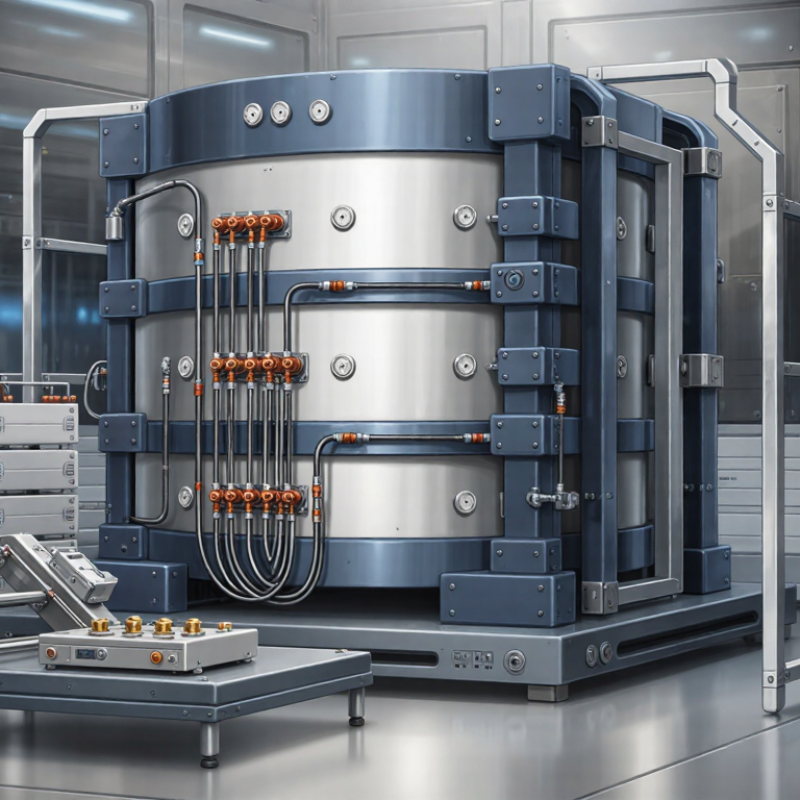
What Is the Best Super Cryogenic Refrigerator in 2026?
Cryogenic Refrigerators: Definition, Purpose, and Operating Principles
A cryogenic refrigerator is a machine that removes heat to reach temperatures far below ordinary freezer levels. It can cool sensors, superconducting circuits, research samples, and other equipment that must operate in extreme cold. Unlike a storage container filled with coolant, many systems run continuously in a closed cycle. They compress and expand a working gas, moving heat away from the cold stage. The exact method depends on the design. Pulse-tube and Gifford–McMahon systems are common options, while dilution refrigerators can reach especially low temperatures. Cold is only part of the job. Vibration, cooling power, temperature stability, and maintenance also matter.
Choosing the best system means matching its capabilities to the real experiment, not chasing the lowest temperature alone. A refrigerator may reach a striking minimum temperature but struggle with heat loads or vibration-sensitive measurements. Compare the required temperature range, sample space, cooling time, operating noise, and service needs. Specifications deserve a second look: test conditions may differ from a working laboratory. The “best” choice is rarely universal.
Tips: Write down your sample’s heat load and temperature target before comparing models. Ask how performance changes under realistic operating conditions. Check space and vibration limits, too. Small details matter. If results seem inconsistent, review sensor placement and thermal connections; a loose contact can distort readings. Don’t assume the published minimum temperature tells the whole story.
| Technology or Factor | How It Works | Typical Temperature Range | Common Uses | Key Advantages | Important Trade-Offs |
|---|---|---|---|---|---|
| Cryogenic refrigerator (general definition) | A closed-cycle or gas-cycle refrigeration system that removes heat to produce and maintain temperatures far below ordinary refrigeration temperatures. The term “cryogenic” is commonly associated with temperatures below approximately 120 K, although usage varies by field. | Application-dependent; systems may operate from below 120 K down to a few kelvin. | Scientific instruments, superconducting systems, infrared sensors, gas liquefaction, and low-temperature research. | Can provide sustained cooling without regularly replenishing a cryogen in many closed-cycle designs. | Required temperature, cooling capacity, vibration, heat load, and operating cost must all be considered. |
| Gifford–McMahon (GM) cryocooler | Uses a compressor and a displacer to move and expand working gas, commonly helium, through a regenerative cycle. | Commonly used for stages around 4 K to 80 K, depending on design. | Superconducting magnets, cryopumps, and systems requiring low-temperature cooling. | Established technology with options for substantial cooling at low temperatures. | Moving components can transmit vibration; compressor and maintenance requirements depend on the system. |
| Pulse-tube cryocooler | Uses oscillating gas pressure and regenerative heat exchange; the cold head has no moving displacer. | Common designs serve approximately 4 K to 100 K, with performance depending on the configuration. | Low-vibration research systems, superconducting equipment, and sensitive detector cooling. | No moving parts at the cold tip can reduce vibration and simplify the cold-head design. | Compressor vibrations may still require isolation; performance and efficiency vary by operating point. |
| Stirling cryocooler | Compresses and expands gas in a regenerative cycle, typically using a mechanically driven piston and displacer. | Often used for cooling in the tens-of-kelvin range; exact limits depend on the design. | Infrared detectors, compact instruments, and small-scale cryogenic systems. | Can be compact and responsive, with a broad range of small-system designs. | Mechanical motion can cause vibration and wear; service life depends on design and operating conditions. |
| Joule–Thomson (JT) cryocooler | Cools gas through throttling and expansion, often using a recuperative heat exchanger; some systems use mixed refrigerants. | Temperature depends strongly on gas composition, pressure, precooling, and system design; specialized designs can reach cryogenic temperatures. | Compact cooling, gas cooling, and applications where a simple cold end is beneficial. | Can have a mechanically simple cold end and can be designed for compact or remote installations. | May require high-pressure gas handling, careful working-fluid selection, or precooling. |
| Choosing the “best” system | Match the refrigerator to the required temperature, heat load, cooling stages, duty cycle, installation space, and system interfaces. | Set by the application’s minimum temperature and allowable temperature stability. | Any application where a specific temperature and cooling capacity must be maintained. | A requirements-based selection can balance performance, reliability, vibration, and lifetime cost. | There is no universally best technology; a model’s performance must be checked at the actual operating temperature and heat load. |
| Key performance data to compare | Review the manufacturer’s cooling-capacity curve, minimum temperature, input power, cooldown time, vibration data, and service requirements. | Compare data at the intended operating point rather than relying on a minimum-temperature figure alone. | Technical evaluation, procurement, and system integration. | Provides a like-for-like basis for comparing complete systems. | Published values may use different test conditions; verify interfaces, ambient conditions, and measurement methods. |
Operating principle: A cryogenic refrigerator transfers heat from a cold region to a warmer environment by cyclically compressing, regenerating, expanding, or throttling a working gas. The achievable temperature and cooling capacity depend on the cycle, operating conditions, and applied heat load.