Global sourcing decisions often begin with cost, but Compressed Gas demands a wider view. It combines product quality, transport planning, cylinder management, and supplier accountability. A reliable source can maintain consistent purity across different production batches. It can also provide clear specifications, safety data, inspection records, and traceable filling information.
Small details matter. A shipment may cross several climates before reaching a factory. Temperature changes, vibration, and handling delays can affect delivery conditions. Strong suppliers explain their packaging methods and recommend suitable storage areas. They also communicate openly when schedules change. That honesty is valuable. It protects production teams from avoidable surprises.
Experience shows that the cheapest quotation is rarely the complete answer. Buyers should compare total landed cost, documentation quality, technical support, and emergency response. Supplier audits, sample testing, and regular performance reviews add practical confidence. Independent standards and qualified logistics partners can strengthen this process. Still, no sourcing plan is flawless. Forecasts can miss seasonal demand, and a trusted supplier can experience unexpected disruption. That possibility deserves attention.
A thoughtful strategy builds alternatives without sacrificing quality. It confirms responsibilities before the purchase order is issued. It also gives staff clear procedures for receiving and storing cylinders. Compressed Gas can support efficient international operations when safety, expertise, and evidence guide every decision. The goal is not simply to move products across borders. It is to create a dependable supply chain that people can inspect, understand, and improve.
Compressed gas is a gas stored under pressure, often in a cylinder or specialized vessel. The pressure reduces the space it occupies, but it also changes how the product must be packaged, handled, and transported. For a sourcing team, the product is not just a gas name on a purchase order. Specifications may include composition, purity, fill pressure, container size, and valve type.
Small differences add up. A cylinder that fits one filling setup may not connect to another. Buyers should confirm these details with suppliers before shipment, then compare the documents with the physical labels on arrival. Clear records help teams trace batches and investigate quality concerns. Storage conditions matter too: a shaded, ventilated area is generally more suitable than a hot loading bay. Exact requirements depend on the gas and its container, so qualified technical guidance is important.
Global sourcing adds distance and handoffs. A shipment may pass through several warehouses, where delays or rough handling can affect delivery plans. Ask who is responsible for inspection, packaging, and transport coordination at each stage. Check that the supplier can explain its test records and respond to questions in practical terms. I would not assume that a familiar product description guarantees identical performance; specifications and local equipment can differ. That uncertainty deserves a careful check.
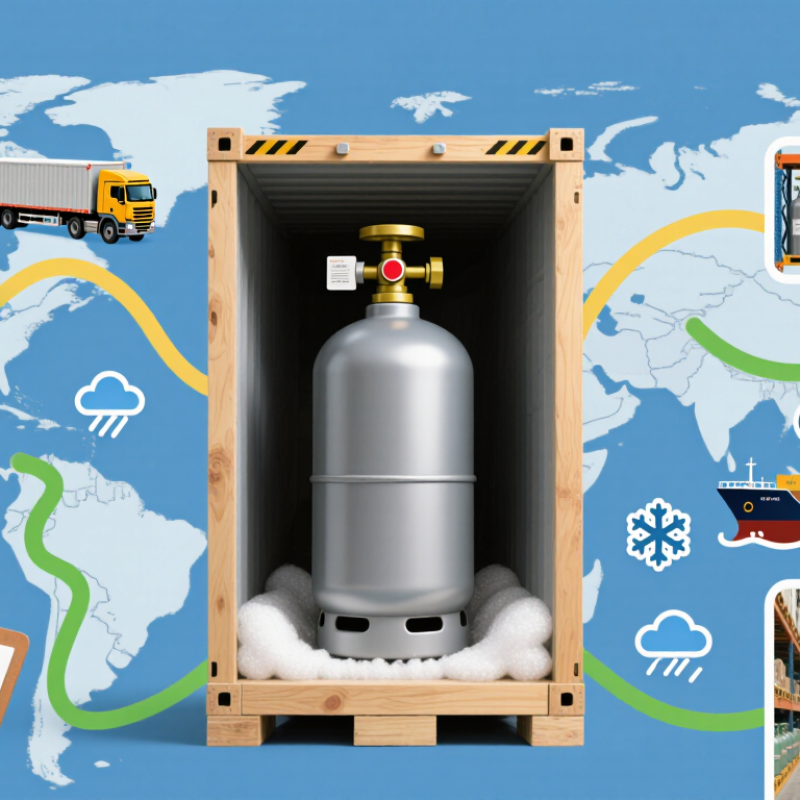
Compressed gas can help international supply chains move essential industrial inputs in standardized, traceable units. Cylinders and tube containers protect product integrity and allow staged deliveries to factories, laboratories, and service sites. That flexibility matters when demand shifts or port delays disrupt planned schedules.
UNCTAD’s Review of Maritime Transport 2024 notes that over 80% of world trade by volume travels by sea. For gas suppliers, reliable export packaging and clear documentation are therefore practical necessities, not minor details.
A shipment’s performance depends on more than the gas itself. Buyers and logistics teams should confirm cylinder specifications, valve compatibility, product identification, and handling instructions before dispatch. Consistent inspection records can reduce avoidable delays at transfer points.
In practice, a mislabeled pallet or a mismatched connection may hold up a whole delivery.
Small errors matter.
UNCTAD’s findings describe the scale of maritime dependence; they do not guarantee that any particular route or shipment will be reliable.
Tips:
Match packaging to the destination’s equipment, verify documents before loading, and build time for inspections. Keep a cylinder count at each handoff. It sounds basic, but busy teams can miss it.
Also review local transport and storage requirements with qualified logistics partners, since procedures vary by destination and cargo type. compressed gas supports global sourcing best when planning, packaging, and communication stay aligned—even when the schedule does not.
Key Benefits of Sourcing Compressed Gas Globally
Global sourcing can widen access to compressed gases when local supply is limited or demand changes quickly. Buyers may compare availability, delivery schedules, purity grades, and packaging options across multiple regions. This can help manufacturers keep production plans moving, especially when a process depends on a steady, well-defined gas specification. More options matter.
A broader supplier network can also support continuity. If one route faces delays, qualified alternatives may reduce disruption, though switching sources still requires careful checks. Review certificates of analysis, cylinder or vessel condition, labeling, and transport arrangements before purchase. Confirm that the gas specification matches the intended equipment and process. Details matter.
The cost picture is less simple than a quoted unit price. Freight, storage, handling, exchange rates, and delivery frequency can change the final cost. Longer routes may also complicate lead times. That looks tidy on paper; in practice, schedules slip, and forecasts are not always right. Buyers should compare landed costs and request clear delivery terms, then track actual performance over time. Reliable records make it easier to spot recurring quality or service issues and adjust sourcing decisions with evidence.
Typical cylinder pressures show how compressed gases can be supplied in standardized, transportable containers. Standardized specifications can make it easier to compare suppliers across markets.
Illustrative typical nominal filling pressures in bar. Actual pressures vary by cylinder, supplier, local standards, and gas; acetylene is stored dissolved in a solvent rather than as a simple compressed gas.
Why Choose Compressed Gas for Global Sourcing?
Safety, Quality, and Regulatory Factors to Evaluate
Compressed gas can support reliable production when buyers verify the supply chain, not just the quoted price. A cylinder may hold gas at pressures near 200 bar, depending on its design and contents. That makes valve protection, secure upright storage, clear labeling, and trained handling essential. The U.S. Bureau of Labor Statistics recorded 2.6 million nonfatal workplace injury and illness cases in private industry in 2023. This figure covers all industries, not gas operations alone, but it underscores why documented safety procedures matter. Ask suppliers for current safety data sheets, cylinder inspection records, and evidence that filling and transport follow applicable requirements in both origin and destination markets.
Quality needs equally careful checks. Request a certificate of analysis for each lot, including stated purity, test method, and traceability details. Confirm that the specification matches your process; a small impurity can affect sensitive instruments or product consistency. Check whether the supplier’s quality system is independently certified, and review how it handles rejected cylinders, complaints, and corrective actions. Regulatory duties vary by gas, packaging, route, and country, so confirm requirements with qualified compliance staff before shipment. Paperwork alone is not proof of control.
Tip: Compare cylinder markings with shipping documents at receipt. Record seal condition, batch number, and any damage before connecting the cylinder. It takes minutes. Don’t skip it.
| Evaluation Factor | What to Check | Useful Evidence | Why It Matters in Global Sourcing |
|---|---|---|---|
| Gas identity and grade | Confirm the chemical identity, stated purity, grade, and any limits for relevant impurities. Match the specification to the intended process and destination requirements. | Product specification, certificate of analysis for the supplied lot, and a documented method for handling specification changes. | Gas names and grade descriptions alone may not establish that a product meets a particular application’s impurity or performance requirements. |
| Cylinder and pressure-vessel compliance | Check cylinder design, inspection status, test markings, valve type, and acceptance rules in the destination market. Confirm that the cylinder is approved for the gas and service pressure. | Permanent cylinder markings, inspection records where available, supplier documentation, and confirmation from the receiving carrier or competent authority. | Pressure receptacle rules and accepted markings can differ between jurisdictions. A cylinder accepted at origin may not be acceptable for transport or use at destination. |
| Hazard classification and transport | Verify the applicable dangerous-goods classification, proper shipping name, identification number, labels, packaging, and transport documents for each shipment route. | Current safety data sheet, dangerous-goods declaration where required, package labels, and route-specific carrier acceptance requirements. | International and domestic transport rules depend on the gas, packaging, transport mode, and route. Requirements should be checked against the rules in force for the shipment. |
| Safety data and workplace controls | Review hazards such as pressure, flammability, toxicity, oxidation, or oxygen displacement, as applicable. Confirm that storage, ventilation, segregation, and emergency procedures suit the site. | Current safety data sheet in the required language, site risk assessment, storage instructions, and emergency-response information. | Compressed gases can present serious hazards even when the gas itself is not toxic. Local workplace and fire-safety requirements may apply. |
| Traceability and batch control | Establish how each cylinder or batch is identified, linked to test results, and tracked through filling, transport, receipt, and use. | Lot or cylinder identifiers, filling and inspection records, delivery records, and a defined process for investigating quality issues. | Traceability helps buyers isolate affected product, investigate deviations, and maintain reliable records across multiple suppliers and borders. |
| Filling and quality controls | Assess controls that prevent contamination, mix-ups, moisture ingress, and incorrect filling. Verify that inspection and analytical methods are appropriate to the specification. | Documented filling procedures, equipment-maintenance records, quality-control results, and evidence of independent accreditation where relevant. | Consistent controls support repeatable gas quality. Accreditation can provide useful assurance, but its scope should cover the relevant activity or test. |
| Regulatory and documentation readiness | Determine which product, transport, import, customs, and workplace rules apply in the destination country and along the route. Check document language and format requirements. | Destination-specific compliance checklist, safety data sheet, product and shipping documents, and written confirmation of import and carrier requirements. | Regulatory responsibilities may be shared among the supplier, shipper, importer, and end user. Requirements can vary by country and change over time. |
| Supply continuity and logistics | Evaluate production capacity, lead times, shipping restrictions, cylinder availability, return arrangements, and contingency options for disruptions. | Written delivery terms, forecast and allocation process, cylinder-pool or return procedures, and documented continuity arrangements. | Cross-border supply can be affected by transport availability, customs processes, cylinder return rules, and route-specific restrictions. |
| Supplier qualification and change control | Review the supplier’s quality system, complaint handling, corrective-action process, and notification procedure for changes to product, process, or packaging. | Supplier questionnaire, audit or assessment records, change-notification terms, and documented complaint and corrective-action procedures. | Clear supplier controls make it easier to assess whether a change could affect gas quality, equipment compatibility, safety, or regulatory status. |
| Total landed cost | Compare gas and filling charges together with freight, duties or taxes where applicable, cylinder rental or deposits, handling, testing, and return costs. | Itemized quotation, delivery terms, cylinder ownership or rental conditions, and a written schedule of additional charges. | A purchase price alone may not reflect the full cost of importing, handling, storing, and returning compressed-gas cylinders. |
Note: Regulatory and transport requirements depend on the gas, cylinder, transport mode, route, and destination. Confirm current requirements with the relevant competent authorities and qualified dangerous-goods professionals before shipment.
A reliable global gas supplier does more than quote a price. They should explain gas specifications, available purity grades, cylinder sizes, and delivery conditions in plain language. Ask for current certificates of analysis and safety data sheets, then check that product names and batch details match your order. Small mismatches matter.
Look closely at cylinder controls. A capable supplier can describe inspection dates, valve protection, labeling, and how cylinders are secured during transport. Request written details about packaging, customs paperwork, and local delivery partners before placing a large order. Test the process with a small shipment if practical. Delays reveal a lot.
Communication is part of quality. Agree on response times, order-change procedures, and a named contact for urgent issues. Ask how the supplier handles shortages, damaged cylinders, or a missed delivery, and look for specific steps rather than broad promises. Check references from customers with similar gas requirements and destinations. Keep records of specifications, delivery dates, and any quality concerns. Not every supplier can serve every route reliably; that is worth admitting early. A supplier’s willingness to discuss limits may be more useful than an impressive map of service regions.