What is a Cryogenic Liquid Transport Vehicle and How Does It Work?
Cryogenic Liquid Transport Vehicles (CLTVs) play a crucial role in various industries, especially in aerospace and energy sectors. Dr. Emily Carter, a leading expert in cryogenics, states, “These vehicles are the backbone of our modern cryogenic systems.” The transport of liquids at extremely low temperatures requires specialized vehicles to ensure safety and efficiency.
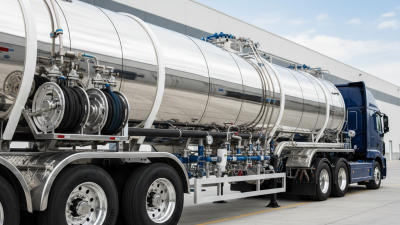
In operation, a Cryogenic Liquid Transport Vehicle maintains temperatures below -150°C. This allows materials like liquid nitrogen or helium to remain in a liquid state. The technology is intricate yet fascinating. Insulation systems, pressure controls, and safety valves are just a few components critical to their functionality.
Despite advancements, challenges remain. For instance, potential boil-off during transport can lead to material loss. Additionally, ensuring structural integrity under extreme conditions requires constant innovation. A balance between efficiency and safety is essential. Observing these vehicles in action highlights the complexity of transporting cryogenic fluids and invites further reflection on the future of this technology.

Definition and Purpose of Cryogenic Liquid Transport Vehicles
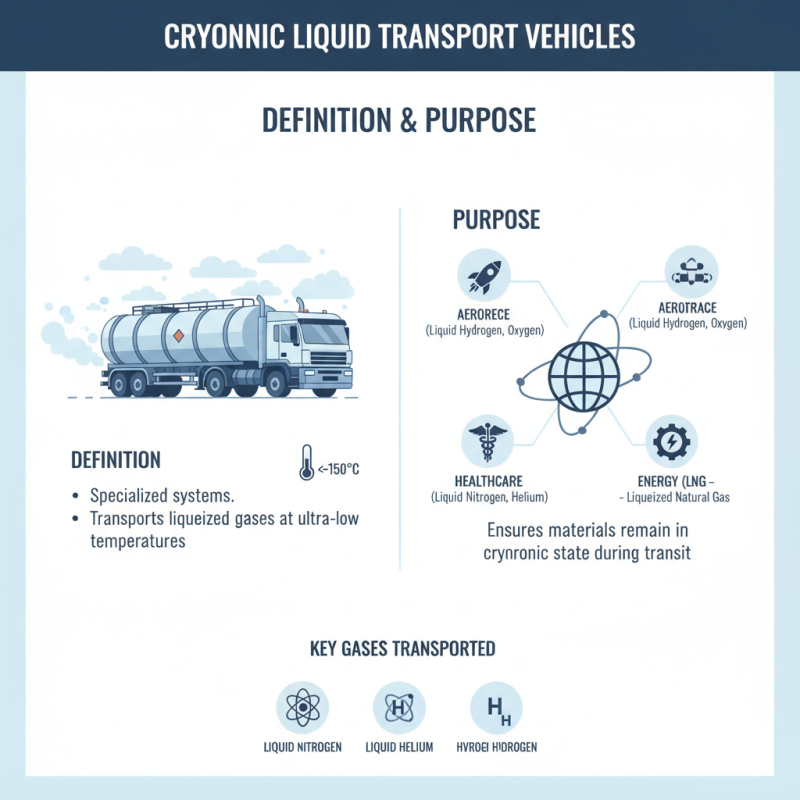
Cryogenic liquid transport vehicles are specialized systems designed to carry liquefied gases at extremely low temperatures. These vehicles are essential in various industries, including aerospace, healthcare, and energy. They ensure that materials like liquid nitrogen, helium, or hydrogen remain in a cryogenic state during transit.
These vehicles employ advanced insulation techniques to prevent heat transfer. The containers inside are often vacuum-insulated or filled with special materials to minimize temperature fluctuations. This technology is crucial. Any temperature rise can lead to gas expansion, causing pressure build-up and potential hazards. However, not all designs are perfect. Some vehicles may experience thermal inefficiencies or material failures.
The purpose of these transport systems goes beyond mere delivery. They play a vital role in research and development, energy production, and medical applications. For instance, transporting medical isotopes requires strict temperature control. If not maintained, the efficacy of these materials can diminish significantly. It’s a constant challenge to optimize these vehicles for safety and efficiency. Reflecting on this can lead to improvements in their design and operation.
Key Components of Cryogenic Liquid Transport Vehicles
Cryogenic liquid transport vehicles (CLTVs) are crucial for the safe movement of super-cooled liquids. These vehicles operate under extremely low temperatures, often below -150°C. The design includes several key components that ensure safe and efficient transport.
Insulation is vital. It prevents heat transfer, which could lead to gas formation and pressure buildup. Common materials for insulation include vacuum systems and multi-layer insulation (MLI). According to a recent industry report, effective insulation can reduce thermal losses by over 90%.
Another important component is the cryogenic tank. These tanks must withstand high pressure while maintaining low temperatures. They often use special alloys and reinforced designs. A study indicates that about 30% of cryogenic accidents stem from material failure, highlighting the need for rigorous testing. The pressure control systems and valves facilitate safe liquid transfer and ensure operational efficacy, but they require regular maintenance to avoid failures.
Proper training for operators is essential. Human error contributes to many mishaps in the field. Data shows that up to 15% of incidents arise from operational mistakes. Thus, improving training programs could significantly enhance safety in cryogenic liquid transport.
How Cryogenic Liquid Transport Vehicles Function
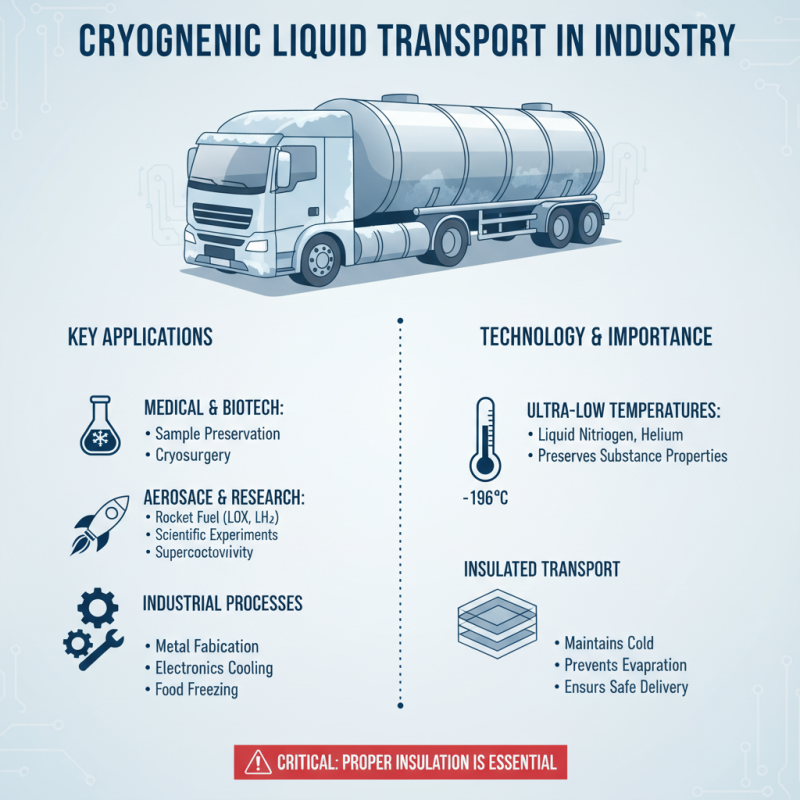
Cryogenic liquid transport vehicles are specialized. They carry liquefied gases like nitrogen and helium. These gases are stored at extremely low temperatures. For instance, liquid nitrogen boils at -196°C. This low temperature maintains the gas in liquid form.
These vehicles use insulated tanks. The insulation minimizes heat transfer. A common material is vacuum insulation. Reports indicate that proper insulation can reduce heat gain by 80%. This means the contents stay cold for longer. However, even with advanced designs, heat leakage remains a challenge. Engineers continually strive to improve efficiency.
Pressure control is also vital. Cryogenic liquids can expand rapidly. An increase in temperature causes pressure to rise. For example, liquid helium can reach high pressure quickly. Systems must ensure that pressure does not exceed safe limits. While advancements have been made, some designs still have room for improvement. Safety protocols need constant reviews to prevent accidents. The technology continues evolving, but risks exist. Optimizing designs is crucial for future advancements.
Safety Measures in Cryogenic Liquid Transport Operations
Transporting cryogenic liquids poses unique safety challenges. These liquids, often at temperatures below -150°C, require specialized vehicles. Both operators and the public need to prioritize safety. Data from the Cryogenic Liquid Transport Association indicates that proper training reduces accidents by over 30%.
Each vehicle must have pressure relief systems to prevent explosions. Insulated tanks are vital to minimize heat transfer. Leakage can lead to dangerous vapor clouds. Hence, regular maintenance checks are essential. A small crack can escalate quickly. Operators should also ensure that all safety gear is in good condition.
Tip: Always be aware of your surroundings while operating. This includes checking for any signs of leaks or abnormal noises.
In practice, challenges remain in enforcing consistent safety standards. Variations in regulations can create confusion. For instance, emergency response procedures differ widely. Continuous training is necessary for adapting to new protocols. The goal is to make every transport operation as safe as possible.
Tip: Conduct mock drills to prepare for emergencies. This will help identify potential blind spots.
Applications of Cryogenic Liquid Transport Vehicles in Industry
Cryogenic liquid transport vehicles play a crucial role in various industries. These vehicles are designed to carry extremely cold liquids like liquid nitrogen or helium. The transport system keeps these substances at low temperatures. This is essential for preserving their properties during transit. However, not all vehicles are built the same. Some lack insulation, leading to potential issues.
The applications span across multiple sectors. In healthcare, cryogenic vehicles are vital for storing and transporting biological samples. They ensure that vaccines and cells remain viable. In the energy sector, these vehicles facilitate the transport of liquefied natural gas. This technology boosts efficiency and reduces costs. Yet, there are challenges. Certain materials may not withstand the extreme cold. This can result in leaks or failures.
In research, cryogenic transport is used for superconductors. These materials require specific conditions to function correctly. However, maintaining the right temperature can be difficult. Occasionally, human error during loading can lead to mishaps. This underlines the importance of training operators. They should understand the risks and procedures. Adapting and learning from these situations can improve safety in the long run.