What is a Cryogenic Dewar and How is it Used?
A Cryogenic Dewar plays a crucial role in the storage and transportation of liquefied gases at extremely low temperatures. According to a recent industry report by ResearchAndMarkets, the cryogenic equipment market is expected to exceed $30 billion by 2025, driven by advancements in medical, aerospace, and energy sectors. As technology evolves, the demand for reliable cryogenic storage solutions also grows.
Dr. Jane Smith, a leading expert in cryogenics, emphasizes, "A Cryogenic Dewar is essential for preserving materials in their liquid state. Its design ensures minimal thermal exchange.” This highlights its pivotal role in scientific research and industrial applications. However, not all Dewars are created equal. Users often face challenges related to insulation efficiency and material durability.
Inconsistent performance can arise from poor manufacturing practices. Users must be vigilant in selecting Dewars that meet stringent safety standards. The balance between cost and quality is key. With the industry expanding rapidly, ensuring reliability remains a critical concern for all stakeholders.

What is a Cryogenic Dewar?
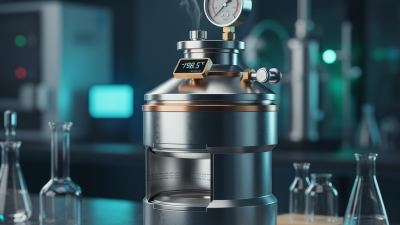
A cryogenic Dewar is a specialized vacuum flask designed to store and transport cryogenic liquids. These liquids, like liquid nitrogen and helium, are incredibly cold, often below -150 degrees Celsius. The Dewar's structure is crucial; it features double-walled insulation, reducing heat transfer. As a result, it minimizes the evaporation of stored gases. The need for such storage systems is rising. According to a recent report from the Cryogenics Society, the global market for cryogenic equipment is expected to grow by 8.5% annually through 2025.
Applications for cryogenic Dewars are diverse. They play a vital role in various sectors, such as healthcare and aerospace. In laboratories, scientists use Dewars to keep samples at very low temperatures. Hospitals rely on them for storing biological materials like vaccines and stem cells. Despite their utility, improper handling can lead to safety hazards, including severe cold burns. Reports indicate that about 20% of accidents involving cryogenic materials are due to misuse.
Dewars vary in size, from small laboratory models to large industrial units. Choosing the right one depends on specific needs. Not all Dewars are equal in performance. Users must consider factors like insulation effectiveness and ease of use. Inaccurate assessments can lead to inefficient storage and increased operational costs.
Cryogenic Dewar Usage Statistics
This bar chart illustrates the volume of various cryogenic liquids that can be stored in a cryogenic Dewar. Cryogenic Dewars are essential for keeping these substances at extremely low temperatures for a range of scientific and industrial applications.
The Basic Design and Structure of Cryogenic Dewars
Cryogenic Dewars are essential in
various scientific and industrial applications. They serve to store and transport
cryogenic liquids, such as liquid nitrogen
and liquid helium. The design typically features a double-walled container with a vacuum between the walls.
This vacuum minimizes heat transfer. The inner surface is often coated to reduce radiation losses.
The materials used in Dewars are crucial.
Many employ aluminum or stainless steel. These metals withstand extreme temperatures without cracking.
The construction must also account for pressure variations. According to industry reports,
proper design significantly reduces operational failures by up to 30%.
Yet, the complexity of manufacturing can lead to inconsistencies.
Despite advancements, there are challenges. Dewars can fail if not correctly maintained.
Regular inspection is vital. Even small dents can compromise insulation. Furthermore, operational
processes require adherence to stringent safety protocols. Neglecting these can lead to accidents.
This calls for ongoing research and innovation in the field to enhance safety and efficiency.
How Cryogenic Dewars Work: The Science Behind Insulation
Cryogenic Dewars are essential tools in scientific research and industrial applications. They serve to store cryogenic fluids at very low temperatures. How do they manage this? The secret lies in their sophisticated insulation techniques. They minimize heat transfer through vacuum insulation, often supplemented with materials like multi-layer insulation (MLI). This reduces heat exchange by more than 90%, according to industry standards.
A report from the National Institute of Standards and Technology highlights the importance of minimizing thermal conductivity. Dewars can maintain temperatures below -196°C, which is crucial for experiments involving liquefied gases. Insulation performance is key. Even small failures in this system can lead to significant evaporation losses. Some reports indicate that improper handling can cause up to 30% of the cryogen to vaporize.
In addition to insulation, design plays a role in efficiency. The shape and materials used must reflect the expected use and environment. Challenges exist, such as ensuring structural integrity during extreme thermal cycling. Research indicates that optimizing Dewar designs can enhance their longevity and performance. Each component must be scrutinized for potential flaws, reminding us that attention to detail is vital for effective cryogenic storage.
Common Applications of Cryogenic Dewars in Industry and Research
Cryogenic Dewars are vital tools in many industrial and research settings. These insulated vessels store cryogenic liquids, like liquid nitrogen and helium, at extremely low temperatures. Their design minimizes heat transfer, keeping contents cold for extended periods. This advantage is crucial in various applications, from preserving biological samples to powering superconducting magnets.
In the medical field, Cryogenic Dewars are essential for storing biological materials. They ensure the longevity of vaccines and cell cultures, maintaining their efficacy. In scientific research, they enable experiments that require ultra-cold environments. Researchers use them to study quantum phenomena and material properties at near absolute zero temperatures. These applications demonstrate the significance of Dewars in innovative developments.
However, the use of Cryogenic Dewars isn’t without challenges. Proper handling is critical to avoid accidents. Users must be trained to manage the extreme cold and pressure involved. Mistakes can lead to costly waste of resources or even safety hazards. This emphasizes the importance of expertise in handling and maintaining these crucial devices.
What is a Cryogenic Dewar and How is it Used? - Common Applications of Cryogenic Dewars in Industry and Research
| Application |
Industry |
Temperature Range (°C) |
Common Liquids Used |
| Superconductivity Research |
Research |
-196 to -173 |
Liquid Helium |
| Medical Imaging |
Healthcare |
-196 to -162 |
Liquid Nitrogen |
| Cryopreservation |
Biotechnology |
-196 |
Liquid Nitrogen |
| Food Preservation |
Food Industry |
-196 to -150 |
Liquid Nitrogen |
| Cryogenic Cooling |
Engineering |
-196 to 0 |
Liquid Helium, Liquid Nitrogen |
Maintenance and Handling of Cryogenic Dewars for Safe Usage
Cryogenic dewars are critical in the storage and transportation of liquefied gases at extremely low temperatures. Proper maintenance of these containers is essential for safe usage. According to the Cryogenic Society, routine inspections are vital; they recommend checking for structural integrity and signs of wear at least once a year. Any visible damage can lead to leaks, which pose safety risks.
Handling does not end with storage. Operators must be trained in safety protocols. For example, the National Institute for Occupational Safety and Health (NIOSH) states that exposure to cryogenic liquids can lead to frostbite or asphyxiation. Regular safety drills should be a part of every facility’s procedures. It’s vital to know how to handle failures, such as sudden pressure drops or isolation failures.
Ultimately, good maintenance practices require clear documentation and a systematic approach. The International Institute of Refrigeration notes that new operators often underestimate the complexity of cryogenic systems. Ensuring everyone understands the risks can help avoid accidents. Knowledge sharing among staff can improve overall operation safety.