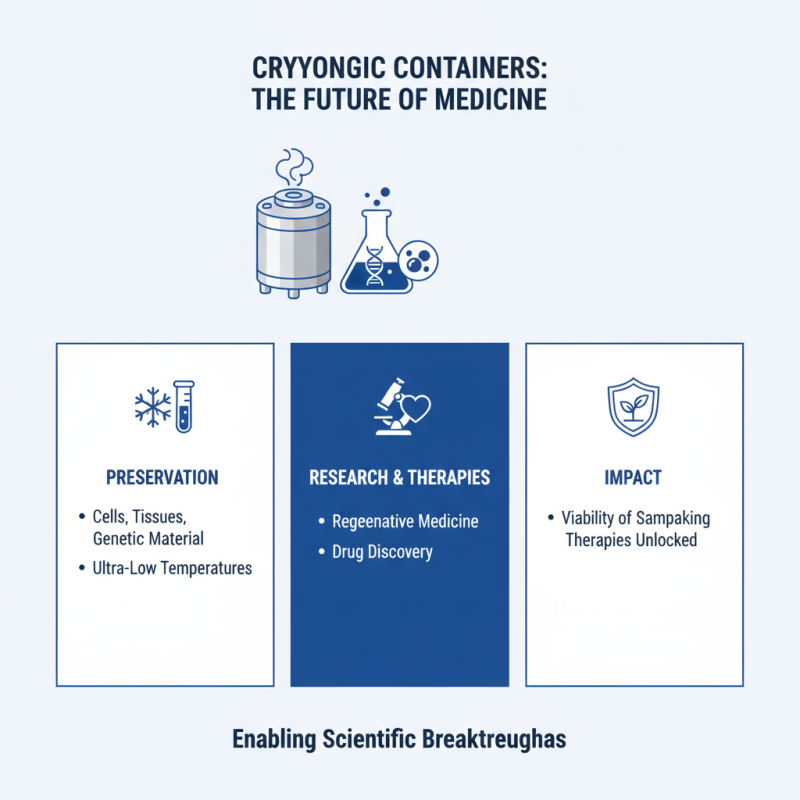
Why Are Cryogenic Containers Essential for Modern Science?
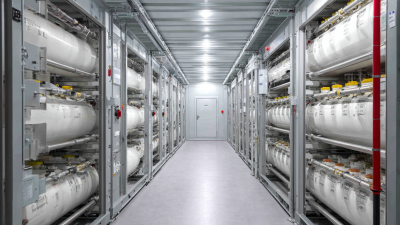
In modern science, Cryogenic Containers play a vital role across various fields. These specialized vessels ensure safe storage of materials at extremely low temperatures. According to the National Institute of Standards and Technology (NIST), they are essential for the preservation of biological samples, cryogenic fuels, and superconductors.
The demand for Cryogenic Containers has surged, driven by advancements in biotechnology and astrophysics. A report by MarketsandMarkets indicates a projected market growth of 7.5% annually through 2026. However, challenges remain. Not all containers are designed with the same efficiency or safety standards.
Despite their importance, there are instances where improper handling leads to significant loss. The scientific community must continuously evaluate these containers' performance to enhance their reliability. Innovations in material science could lead to improvements. Overall, the importance and ongoing evolution of Cryogenic Containers demand careful consideration and responsible usage.
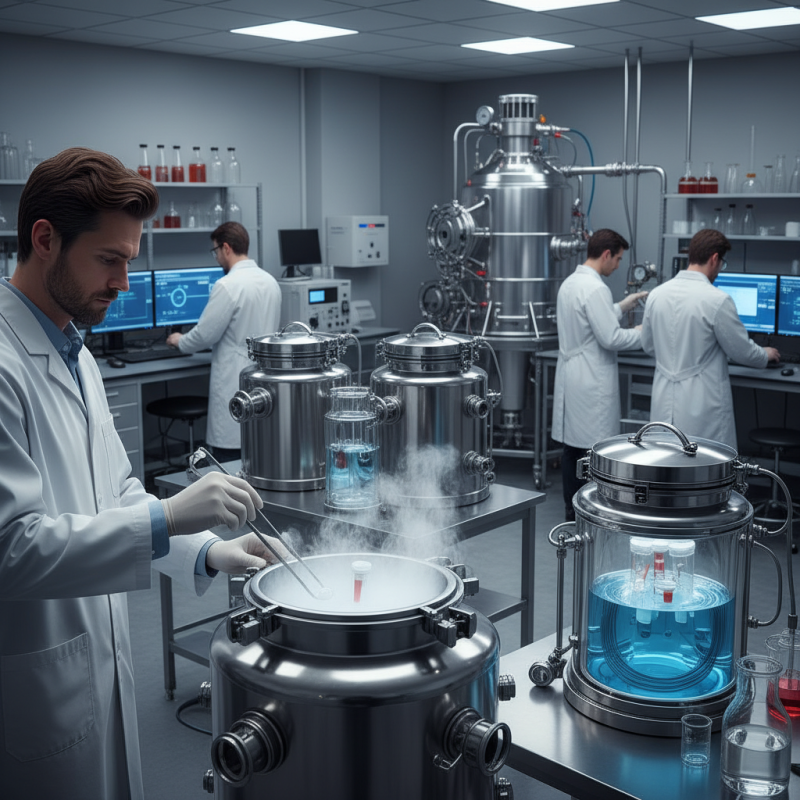
Importance of Cryogenic Containers in Preserving Biological Samples
Cryogenic containers play a pivotal role in modern science. They are crucial for preserving biological samples, such as blood, cells, and tissues. At ultra-low temperatures, biological activity ceases. This halts degradation, ensuring specimens remain viable for research. Keeping samples at temperatures below -150°C can lead to long-term storage solutions.
In laboratories, these containers are often used for regenerative medicine and fertility treatments. The ability to freeze viable oocytes or embryos can change lives. Yet, challenges remain. Not all samples survive the freezing process. Ice crystal formation can damage cells. Researchers continue to seek improved methods.
Handling cryogenic containers also poses risks. Accidental exposure to liquid nitrogen can cause severe frostbite. Researchers need proper training to avoid accidents. Despite the importance, the technology requires continual assessment. Advancements in cryopreservation techniques may offer better results. This is an area ripe for innovation and exploration.
Key Applications of Cryogenic Containers in Medical Research and Biotechnology
Cryogenic containers play a vital role in medical research and biotechnology. These containers store biological samples at extremely low temperatures. This is crucial for preserving cells, tissues, and genetic material. Research in regenerative medicine relies on these containers to maintain the viability of critical samples. Without them, groundbreaking therapies may not reach their full potential.
In the realm of genetics, cryogenic storage aids gene therapy. Researchers need to keep plasmids and viruses stable for experimentation. Cryogenic containers ensure that samples remain active and uncontaminated. However, maintaining these systems isn't always straightforward. It's essential to check temperatures regularly. A slight deviation can ruin precious samples.
Tip: Always label your cryogenic containers clearly. This helps prevent mix-ups during collaborations. Additionally, consider backup storage for high-value samples. A power outage can be disastrous.
Using cryogenic containers in biobanking is another application. These facilities need reliable systems to store thousands of samples. A failure might compromise valuable research. Yet, even with technology, human error can occur. Protocols should be reviewed frequently to minimize risks.
Tip: Invest time in staff training. This reduces the chance of mishandling samples. Encourage a culture of caution and precision.
Technical Specifications of Cryogenic Containers: Temperature and Insulation
Cryogenic containers play a vital role in modern science. They are designed to store materials at extremely low temperatures. Typically, these temperatures range from -150°C to -196°C. This allows scientists to preserve samples without degradation. The technology behind these containers focuses on insulation and temperature control, which are crucial for maintaining low temperatures for extended periods.
The insulation used in cryogenic containers is often multilayered. This design minimizes heat transfer from the outside. Enhanced materials ensure that the contents remain stable. Without proper insulation, samples could thaw or degrade rapidly. When handling these containers, it is essential to avoid sudden temperature changes, as this can compromise the contents.
Tips: Always check the temperature gauge regularly. Make sure the container is not exposed to ambient heat. When transporting, secure the container to prevent tipping. Reflections on the process reveal that maintaining equipment is as critical as its design. Neglecting routine checks can lead to disastrous results.
Impact of Cryogenic Storage on the Shelf Life of Pharmaceuticals and Vaccines
Cryogenic storage is vital for extending the shelf life of pharmaceuticals and vaccines. When stored at extremely low temperatures, many biological products remain stable for longer periods. According to industry reports, vaccines stored at cryogenic temperatures can maintain efficacy for years, compared to just months at standard refrigeration.
For example, mRNA vaccines, crucial for combating diseases, demonstrate significant degradation at higher temperatures. A study revealed that a mere five-degree increase could cut vaccine potency in half. This highlights the need for reliable cryogenic containers in maintaining drug integrity. However, not all facilities can guarantee these conditions, risking product quality and patient safety.
Despite the clear advantages, there are challenges in the cryogenic storage landscape. Many organizations face logistical issues, such as limited access to cryogenic facilities. Training personnel to handle these materials is often inadequate. Furthermore, the cost of maintaining cryogenic conditions must not be overlooked. Each facility grapples with balancing expense and the necessity for high-quality storage solutions.
Impact of Cryogenic Storage on the Shelf Life of Pharmaceuticals and Vaccines
This chart illustrates the shelf life extension of various pharmaceuticals and vaccines when stored in cryogenic containers as opposed to conventional storage methods.
Future Innovations in Cryogenic Technology and Their Scientific Implications
Cryogenic technology continues to transform various scientific fields. As new methods develop, the applications become more diverse. For instance, researchers are exploring cryopreservation for stem cells and embryos. This could lead to breakthroughs in regenerative medicine. The ability to store biological samples at ultra-low temperatures is key.
Innovations in this field may also impact space exploration. Cryogenic fuels have the potential to enhance rocket efficiency. New storage techniques can improve safety and performance. There are challenges, however. Current systems can be expensive and complex. Scientists must address these issues to make technology more accessible.
There’s a need for collaboration between disciplines. Chemists, engineers, and biologists must work together. This can spark innovative solutions. Yet, ethical dilemmas remain. For example, is it right to preserve life indefinitely? It’s essential to examine these questions. Future advancements in cryogenic containers may change our understanding of life itself.
Why Are Cryogenic Containers Essential for Modern Science?
| Application Area |
Cryogenic Temperature (°C) |
Purpose |
Future Innovations |
| Medical Research |
-196 |
Preservation of biological samples |
Improved storage technologies |
| Space Exploration |
-253 |
Fuel storage for rockets |
Advanced insulation materials |
| Quantum Computing |
-273 |
Maintaining qubit stability |
Cryogenic CMOS technologies |
| Material Science |
-196 |
Testing material properties |
Nano-materials in cryogenic environments |
| Telecommunications |
-196 |
Enhancing signal integrity |
Superconducting materials |