| Liquid Nitrogen (LIN) |
−196 °C
(77 K) |
Non-flammable and chemically inert under normal conditions; rapid vaporization can displace oxygen in enclosed areas. |
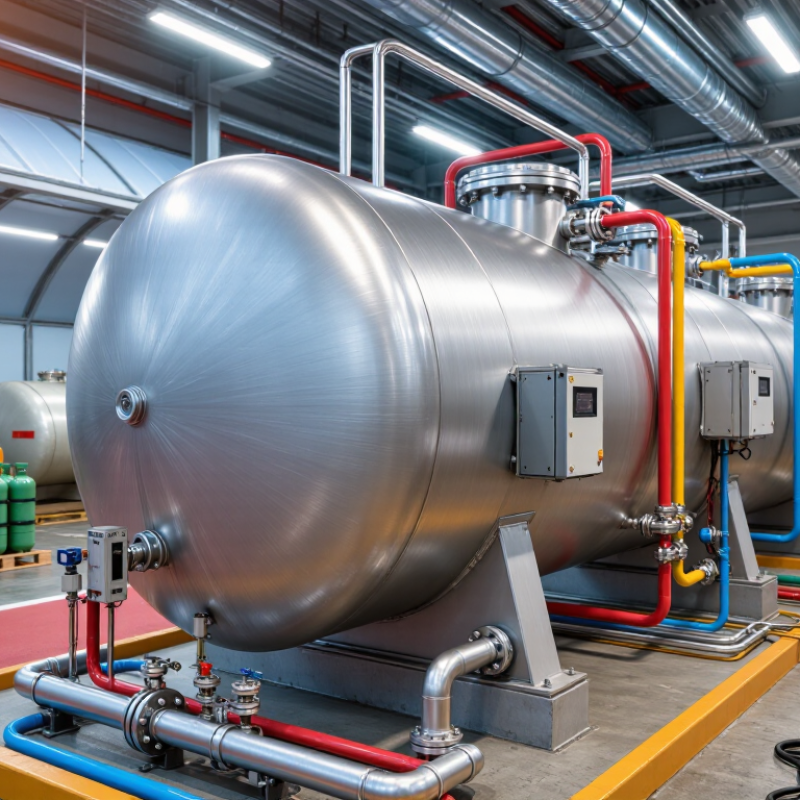
Double-wall, vacuum-insulated pressure vessel with a suitable pressure-building circuit and controlled vapor venting. |
Austenitic stainless steel, aluminum alloys, and other materials qualified for cryogenic service. |
High-quality vacuum insulation, multilayer insulation, low-conductivity supports, and minimized thermal bridges. |
Provide oxygen-deficiency monitoring where ventilation is limited. Confirm the required working pressure, usable capacity, and allowable boil-off rate. |
Laboratories, food freezing, inerting, medical storage, electronics, and industrial gas supply. |
| Liquid Oxygen (LOX) |
−183 °C
(90 K) |
Non-flammable itself but strongly supports combustion; oxygen-enriched materials and surfaces can ignite much more easily. |
Dedicated oxygen-clean, double-wall vacuum-insulated tank with compatible valves, relief devices, and transfer lines. |
Cleaned stainless steel, nickel alloys, and other oxygen-service materials approved by the applicable design standard. |
Vacuum insulation with strict contamination control; avoid oil, grease, organic residues, and incompatible seal materials. |
Use oxygen-compatible components and documented oxygen cleaning. Keep the tank away from combustible materials and ignition sources; size relief protection for credible heat-inleak scenarios. |
Healthcare oxygen supply, metal cutting, wastewater treatment, chemical processing, and aerospace operations. |
| Liquid Argon (LAR) |
−186 °C
(87 K) |
Non-flammable and inert; vapor can accumulate in low or poorly ventilated areas and reduce oxygen concentration. |
Vacuum-insulated cryogenic storage tank with pressure regulation, vent management, and a suitable liquid withdrawal arrangement. |
Stainless steel and aluminum alloys commonly selected for low-temperature compatibility. |
Double-wall vacuum construction and low-heat-leak piping help maintain product quality and reduce boil-off. |
Assess oxygen-deficiency risk, especially indoors. Select instrumentation that remains reliable at cryogenic temperatures and confirm the required delivery pressure. |
Welding shielding gas, metal production, laboratories, semiconductor processing, and inert atmospheres. |
| Liquid Hydrogen (LH2) |
−253 °C
(20 K) |
Extremely cold, highly flammable, and prone to permeation and leakage because of its very small molecule. |
Highly efficient vacuum-jacketed tank with hydrogen-compatible seals, carefully engineered supports, venting, and pressure-control systems. |
Selected stainless steels, aluminum alloys, nickel-based materials, and other materials verified for hydrogen and cryogenic service. |
Very high-performance multilayer vacuum insulation, low-emissivity surfaces, limited thermal bridges, and strict vacuum monitoring. |
Provide hydrogen leak detection, controlled ventilation, ignition-source management, electrical classification where required, and relief systems designed for rapid vapor generation. |
Fuel-cell infrastructure, aerospace systems, energy research, and specialized industrial processes. |
| Liquid Helium (LHe) |
−269 °C
(4.2 K) |
Extremely low boiling point and high sensitivity to heat input; helium can permeate some materials and seals. |
Specialized multilayer vacuum-insulated helium vessel, often with a thermal shield, low-loss transfer line, and recovery or vent-management system. |
Stainless steel, copper, aluminum, and selected low-temperature alloys, depending on the vessel and transfer-system design. |
Multistage thermal shielding, multilayer insulation, optimized supports, and excellent vacuum integrity are essential to limit evaporation. |
Plan for helium recovery where economically or operationally appropriate. Include oxygen-deficiency protection because released helium can displace breathable air. |
Superconducting magnets, medical imaging systems, low-temperature physics, and research equipment. |
| Liquefied Natural Gas (LNG) |
Approximately −162 °C
(111 K) |
Primarily methane; highly flammable vapor can form explosive mixtures with air under suitable conditions. |
Large double-wall, vacuum-insulated or perlite-insulated storage tank with controlled pressure, vapor handling, and emergency shutdown functions. |
9% nickel steel, austenitic stainless steel, aluminum alloys, and other materials qualified for LNG service. |
Annular insulation, vapor-space management, low-conductivity supports, and protection against excessive heat ingress. |
Use gas detection, hazardous-area electrical design, emergency isolation, pressure and vacuum protection, and safe separation distances. Confirm the LNG composition because properties vary by source. |
Marine fuel, power generation, natural-gas distribution, industrial heating, and peak-shaving facilities. |
| Liquid Carbon Dioxide (LCO2) |
−78.5 °C at sublimation point
(solid–vapor equilibrium at 1 atm) |
At atmospheric pressure, carbon dioxide does not remain a stable liquid; liquid storage requires pressure above its triple-point pressure. |
Pressurized, insulated vessel designed specifically for carbon dioxide, with pressure control, relief protection, and suitable vapor-space management. |
Carbon-steel or stainless-steel materials selected according to pressure, moisture control, corrosion requirements, and applicable codes. |
Foam, perlite, or vacuum-assisted insulation may be used depending on capacity and operating pressure; heat leak must be managed to control pressure rise. |
Prevent blocked-in liquid and overpressure conditions. Monitor oxygen levels in enclosed areas because carbon dioxide is an asphyxiant and can accumulate in low locations. |
Beverage carbonation, food processing, water treatment, fire suppression, and industrial gas applications. |