Top 5 Benefits of Cryogenic Air Separation Units at 2026 Canton Fair?
The 2026 Canton Fair promises to be a groundbreaking event for industries worldwide. One key feature will be the focus on advanced technologies, including the Cryogenic Air Separation Unit. This technology stands out for its efficiency in separating gases such as oxygen and nitrogen. The demand for clean and efficient air separation processes is increasing. Companies showcasing these units could greatly benefit from the fair's global exposure.
Attendees will discover how Cryogenic Air Separation Units can enhance production capabilities. These systems are compact, reliable, and energy-efficient. They are essential in various sectors, including healthcare and manufacturing. By demonstrating these units, vendors can attract a broader audience looking for innovative solutions. However, implementing such technology is not without challenges. The initial investment can be high, and users must understand the operational intricacies.
With the introduction of AI-driven navigation at the fair, buyers can easily find suppliers specializing in Cryogenic Air Separation Units. This streamlined approach will facilitate informed decision-making. Potential customers will appreciate the opportunity to engage directly with experts. They can weigh benefits against potential shortcomings. This aspect requires careful consideration. The ambition is clear, and the fair will showcase how these units can drive industries forward.
Overview of Cryogenic Air Separation Technology
Cryogenic air separation technology is transforming industries by producing high-purity gases. This process involves cooling air to extremely low temperatures. At these temperatures, air components like oxygen and nitrogen condense into liquid form. Businesses are increasingly adopting this technology for efficiency and economic benefits.
Reports indicate a significant rise in the demand for industrial gases, with the market projected to reach $100 billion by 2025. Cryogenic units are highly efficient. They can achieve purity levels over 99.5% for gases like oxygen and nitrogen. This level of purity is essential for sectors such as healthcare and aerospace. However, implementation may require significant investment and technical knowledge, posing challenges for smaller companies.
In recent years, energy consumption in cryogenic processes has been a focus. New advancements are aiming to reduce energy usage by up to 30%. However, not all systems achieve this efficiency consistently. Some units still face operational hiccups, leading to increased costs. Addressing these shortcomings remains a priority for the industry. Console research indicates that better maintenance practices can enhance unit performance and reliability, making ongoing operator training crucial.
Top 5 Benefits of Cryogenic Air Separation Units
The chart above illustrates the top five benefits of Cryogenic Air Separation Units, highlighting their significant impact on cost efficiency, energy savings, purity levels, scalability, and environmental benefits. Each category scores indicate the potential advantages these units offer, underscoring their importance in industrial applications.
Key Advantages of Cryogenic Air Separation Units
Cryogenic air separation units (CASUs) are gaining attention for their numerous advantages, particularly in industrial settings. These systems excel at producing high-purity gases. They work by cooling air to extremely low temperatures, allowing for the efficient separation of oxygen, nitrogen, and argon. This process is not only efficient but also incredibly reliable.
One significant benefit is their energy efficiency. CASUs utilize advanced technology to consume less energy compared to traditional methods. However, achieving this efficiency can sometimes lead to complexity in operations. It's crucial for operators to maintain optimal conditions. Minor fluctuations in temperature can impact gas purity and output rates, which requires constant monitoring.
Another advantage is the scalability of CASUs. They can be tailored to fit various production needs. This flexibility allows facilities to expand their operations without massive overhauls. However, the initial investment can be high, which may deter some businesses. Long-term benefits, including lower operational costs, need careful calculation. Overall, while cryogenic air separation units offer many benefits, careful management and consideration are essential for success.
Impact on Industrial Efficiency and Cost Reduction
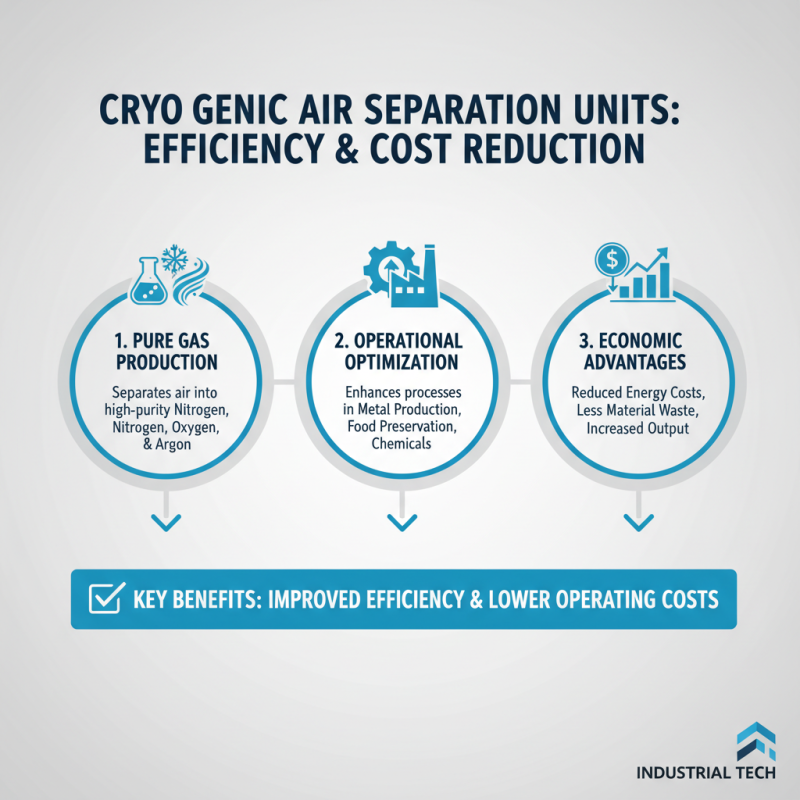
Cryogenic air separation units (CASUs) are transforming industrial processes. These units efficiently separate air into its primary components. Businesses utilizing CASUs report significant improvements in operational efficiency. For instance, nitrogen and oxygen can be extracted in high purity. This simple process enhances various applications, from metal production to food preservation.
Cost reduction is another critical advantage. By using CASUs, industries minimize energy expenses. These systems are designed for optimal performance. However, initial setup costs can be high. Some companies may hesitate, fearing they won’t recoup their investment. Yet, the long-term savings often outweigh these concerns. Regular maintenance can further enhance efficiency, although some facilities overlook this aspect.
Adopting cryogenic technology does come with challenges. Staff training is essential to ensure safe operation. Misunderstandings can lead to inefficiencies or safety risks. Moreover, not every application may benefit from cryogenic solutions. Companies must evaluate their specific needs carefully. Despite potential hurdles, overall industrial efficiency can greatly improve with the right approach.
Applications in Various Industries at the Canton Fair
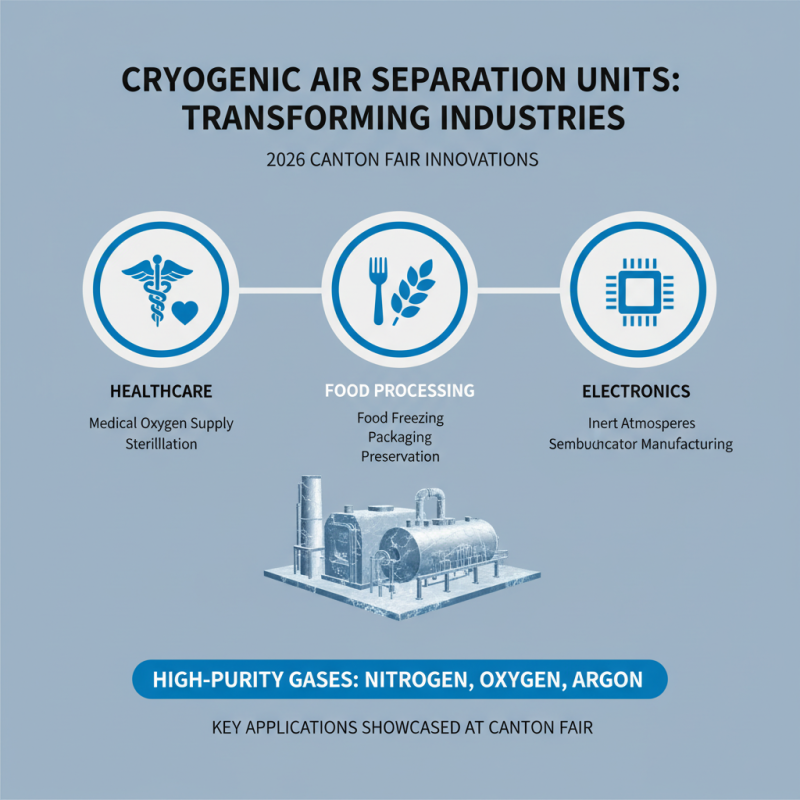
Cryogenic air separation units (ASUs) are transforming various industries. Their capability to produce high-purity gases has significant value. At the 2026 Canton Fair, many companies showcased innovations in this area. This technology is critical for sectors like healthcare, food processing, and electronics.
In healthcare, the production of medical gases is essential. A 2021 report indicated that the global medical gas market was valued at over $8 billion. This market is projected to grow steadily, fueled by rising demand for oxygen therapy and other applications. Cryogenic ASUs enable efficient, cost-effective gas production. They ensure a steady supply of high-purity oxygen and nitrogen, which is vital for hospitals.
The food processing industry also benefits from this technology. High-purity nitrogen is used for packaging and preserving food. According to a recent industry analysis, the global nitrogen market is expected to reach $26 billion by 2028. More manufacturers are investing in ASUs to enhance their production efficiency. However, challenges remain, such as the need for energy-efficient systems. The industry must focus on reducing carbon footprints while maximizing output.
Electricity consumption can be a concern. Optimizing energy use is critical for sustainable growth. Balancing efficiency and environmental impact remains a pressing issue for many companies.
Future Trends and Innovations in Cryogenic Separation Technology
Cryogenic air separation technology is evolving. At the 2026 Canton Fair, innovative trends promise significant advancements. One notable trend is the improvement in energy efficiency. New methods help reduce energy consumption. This shift is crucial in addressing environmental concerns. Energy savings can lower operating costs for businesses.
Another interesting development involves automation. The integration of smart technology will enhance operational efficiency. Automated monitoring systems provide real-time data analysis. Quick adjustments can improve separation processes. Yet, reliance on technology may introduce vulnerabilities. Human oversight remains vital to ensure system reliability.
The materials used in construction are also innovating. Advanced composites are increasing durability. These materials can withstand extreme conditions. However, sourcing these materials sustainably poses challenges. Companies must balance performance with environmental impact. The future of cryogenic separation will need to address these complexities.